

Ask three contractors for a fiber optic cable installation cost estimate and you’ll likely get three different numbers. That’s because pricing depends on distance, terrain, whether you’re trenching underground or running aerial lines, and how many strands you actually need. Without a clear breakdown, it’s easy to either overpay or budget too low and get stuck mid-project.
This guide answers the question directly: what you’ll actually pay per foot, per mile, and per building type in 2026. We cover residential fiber installation prices, business and multifamily property costs, and the labor and material factors that push estimates up or down. You’ll also see how permitting, conduit conditions, and headend equipment affect your final invoice.
We’ve built structured cabling and headend systems for hospitals, hospitality properties, and multi-family campuses, so these numbers reflect real project conditions, not generic averages. Whether you’re planning a single building upgrade or a larger network backbone, you’ll leave with a realistic fiber optic network installation cost range and the questions to ask before signing a contract.
Why fiber optic installation costs vary so widely
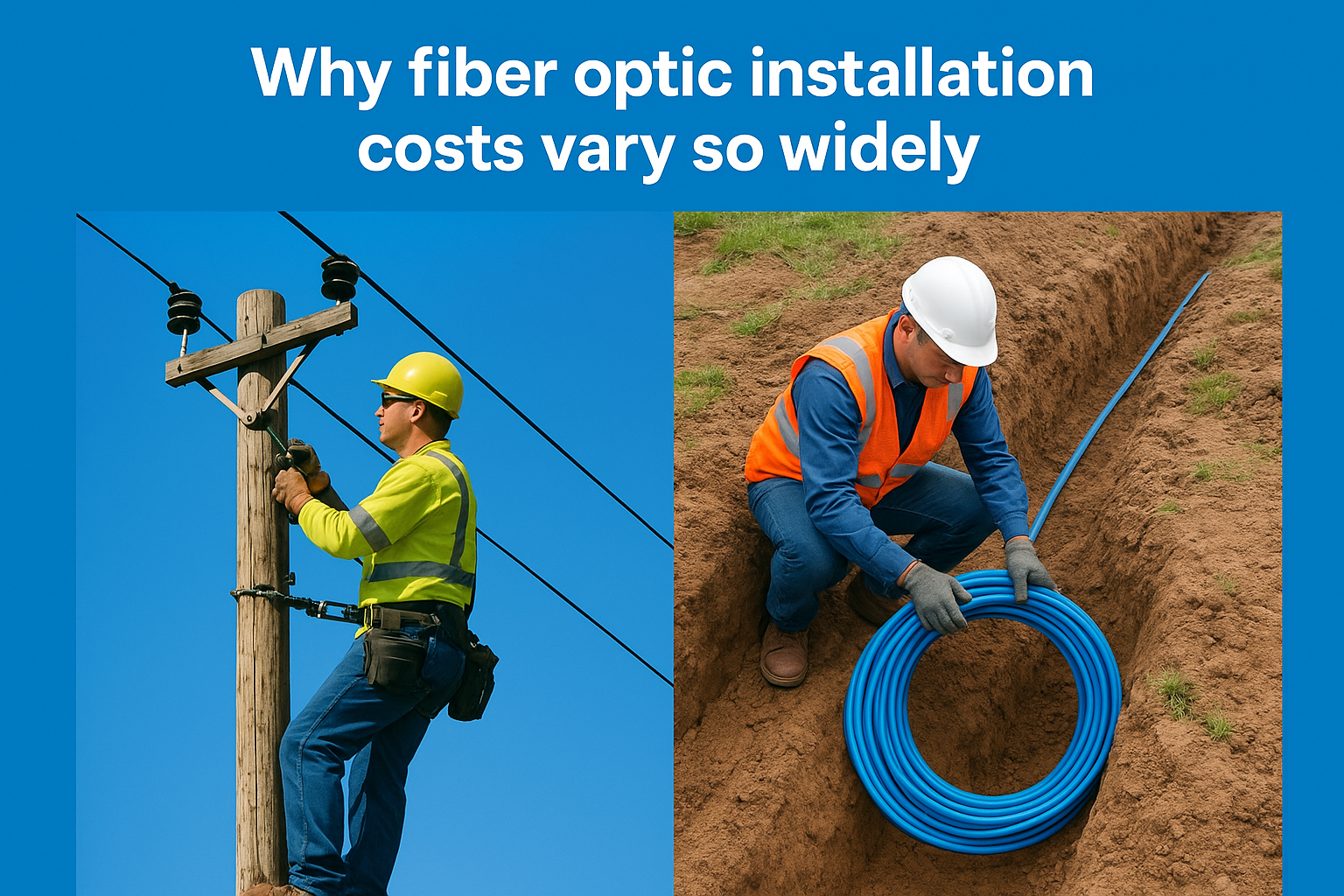
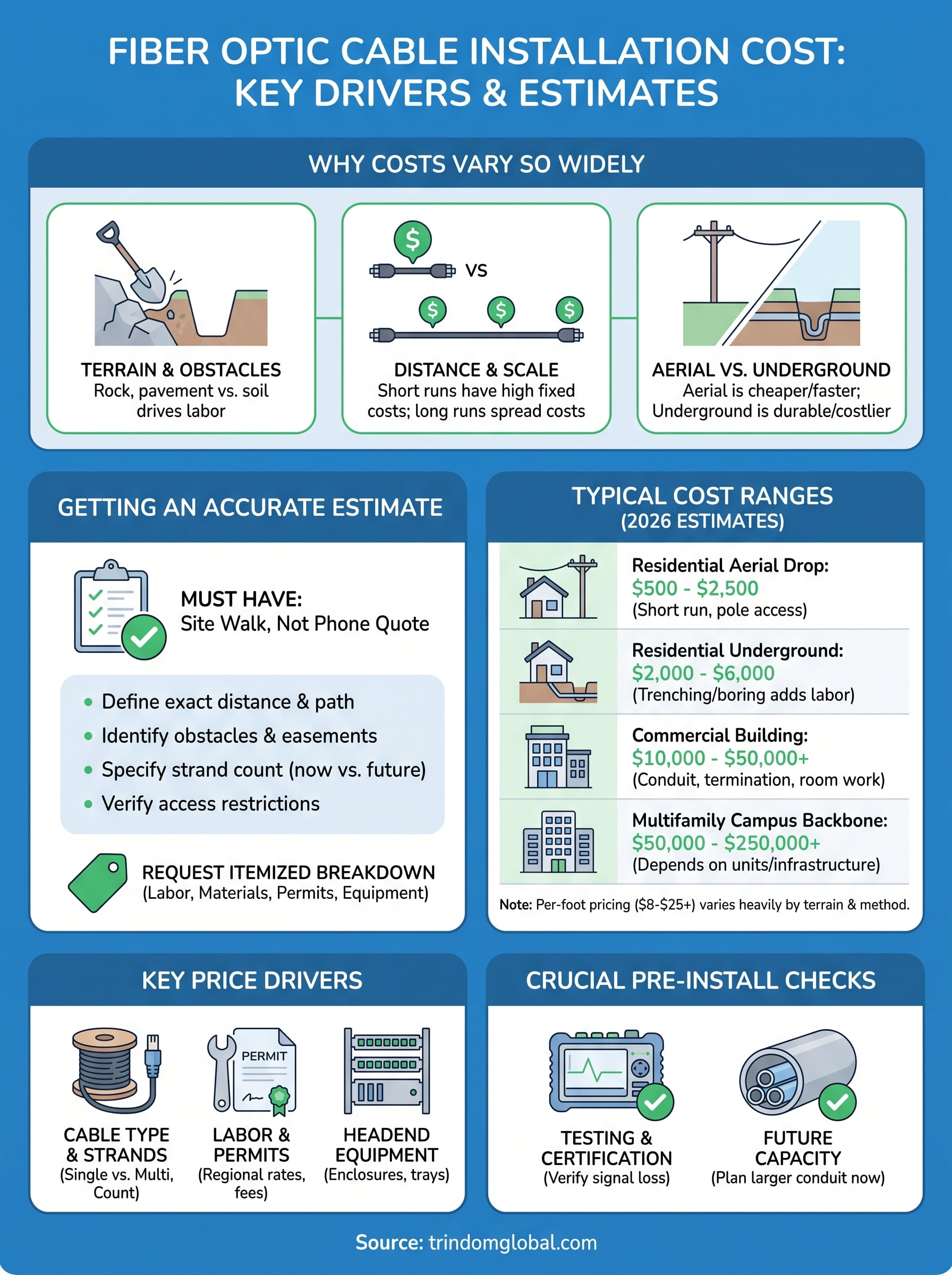
Terrain drives more of the fiber optic cable installation cost than most people expect. Trenching through solid rock or crossing under a parking lot costs far more than laying cable through open, sandy soil. A crew that budgets $8 per foot for a straightforward residential run can hit $25 per foot once they need to bore under a road or navigate a utility easement with existing gas and water lines.
Distance matters too, but not in a simple linear way. Short runs carry a higher per-foot cost because mobilization, permitting, and setup eat into a small job the same way they eat into a large one. Longer runs, especially the kind we handle in headend buildouts for multifamily campuses, spread those fixed costs across more footage, which brings the per-foot number down even as the total project cost climbs.
Two jobs with identical cable lengths can differ by thousands of dollars once terrain, permitting, and labor rates are factored in.
Aerial versus underground installation is another major swing factor. Aerial fiber installation using existing utility poles is typically the cheaper option since it skips excavation entirely, but it depends on pole owner permissions, make-ready work, and local weather exposure. Underground installation, whether direct-buried or run through conduit, costs more upfront but holds up better against storms and physical damage over the equipment’s lifespan.
Regional labor rates round out the picture. A licensed fiber technician in a major metro market commands a different hourly rate than one in a rural service area, and that gap shows up directly on your invoice. Add local permitting fees, which vary by municipality and can range from a simple flat fee to a multi-step inspection process, and you can see why no two estimates ever look identical.
How to get an accurate fiber optic installation estimate
Getting a reliable fiber optic cable installation price starts with a site walk, not a phone quote. Any contractor willing to give you a firm number without seeing the property is guessing, and that guess usually favors them, not you. Insist on a walkthrough that covers your entry point, the run path, and any obstacles like concrete, landscaping, or existing conduit.
Have these details ready before the estimator arrives:
- Exact distance from the demarcation point to the equipment room or panel
- Whether the path is aerial, buried, or a mix of both
- Any known utility easements, HOA rules, or municipal permit requirements
- Number of strands or drops needed now versus future expansion
- Access restrictions, like locked mechanical rooms or limited work hours
A quote built on a site visit beats a phone estimate every time, because terrain and access problems rarely show up until someone’s standing on the property.
Request a written breakdown separating labor, materials, permitting, and any headend or termination equipment. That itemized format lets you compare fiber optic installation cost quotes apples to apples instead of just eyeballing one lump total against another.
Typical costs for residential, commercial, and per-foot jobs
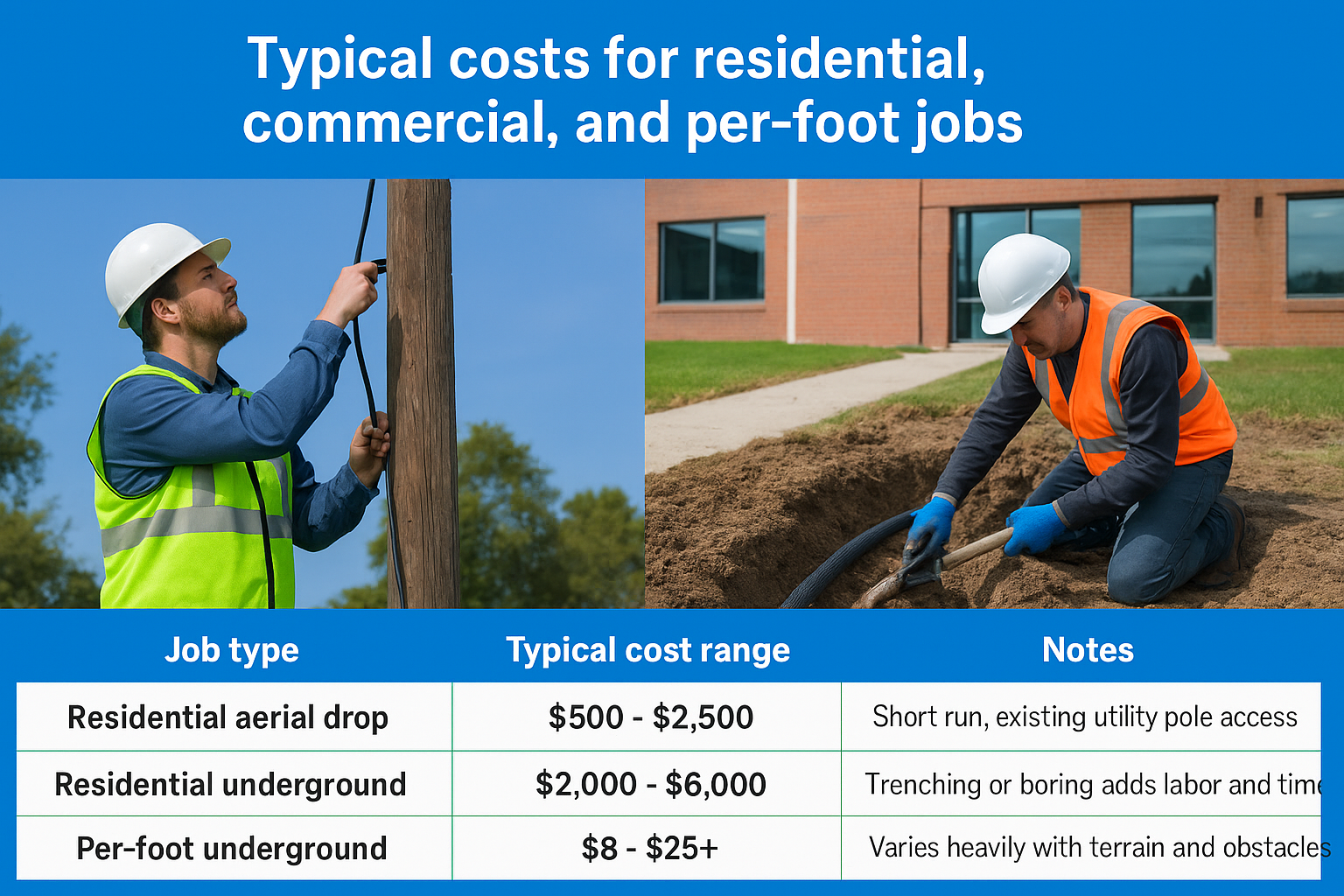
Numbers help more than ranges of ranges, so here’s what real jobs tend to run in 2026. A cost of fiber optic installation for a single-family home with a short aerial drop sits far below a commercial buildout requiring trenching, conduit, and a headend room. Multifamily properties fall somewhere in between, since Trintel-style campus installs share infrastructure across many units, which lowers the per-door cost even as the total project number grows.
| Job type | Typical cost range | Notes |
|---|---|---|
| Residential aerial drop | $500 – $2,500 | Short run, existing utility pole access |
| Residential underground | $2,000 – $6,000 | Trenching or boring adds labor and time |
| Per-foot underground | $8 – $25+ | Varies heavily with terrain and obstacles |
| Commercial building | $10,000 – $50,000+ | Includes conduit, termination, and equipment room work |
| Multifamily campus backbone | $50,000 – $250,000+ | Depends on unit count and existing infrastructure |
Per-foot pricing tells you almost nothing without knowing whether it’s aerial or buried, and over what terrain.
Treat these figures as starting points. Your actual fiber optic internet installation cost depends on the specific factors covered next.
Key factors that drive your final installation price
Six variables shape most fiber optic installation cost quotes, and knowing them helps you spot a lowball or an inflated number before you sign anything.
Cable type and strand count
Single-mode fiber costs more than multimode, and a 12-strand bundle costs less than a 144-strand trunk line built for future capacity. Ordering extra strands now almost always beats paying a crew to remobilize later.
Site conditions and access
Rock, pavement, and existing utilities all add labor hours. A locked mechanical room or restricted work hours also slows a crew down, and slower work means a higher invoice.
Labor, permitting, and equipment
- Regional labor rates: metro crews charge more per hour than rural ones
- Permit fees: municipal requirements range from a flat fee to multi-step inspections
- Headend equipment: splice trays, patch panels, and enclosures add material cost
The cable itself is rarely the expensive part. Labor, permitting, and site conditions drive most of your final number.
Ask your contractor to itemize each of these separately. A single lump-sum figure hides which factor is actually pushing your fiber optic cable installation price higher.
What to know before you install fiber optic cable
Before you sign a contract, confirm what happens after the cable goes in the ground or up on the pole. Many quotes cover installation but leave out splicing, testing, and certification requirements, and those steps matter as much as the run itself. Ask whether your fiber optic cable installation cost includes OTDR testing to verify signal loss across the full length, because a cable that looks fine on install day can still fail under load.
An installation quote without testing and certification isn’t a finished job, it’s half of one.
Permits and inspections
Municipalities treat fiber work differently depending on whether you’re crossing public right-of-way or staying on private property. Pulling the permit yourself can save money, but missing an inspection window can delay your whole project by weeks.
Future capacity
Think past your current need. Adding strands during the original fiber optic installation cost estimate costs far less than remobilizing a crew in two years. If you’re planning a multifamily property or a hospital wing expansion, ask about conduit sizing now, since resizing conduit later means redoing the trench entirely.
Putting your fiber optic budget together
A realistic fiber optic cable installation cost estimate comes from real site conditions, not a per-foot number pulled off a website. Terrain, aerial versus underground routing, labor rates, and permitting all move your total more than the cable itself does. Get a site walk, request an itemized quote, and confirm testing and future capacity before you sign anything.
Budgeting this way protects you from mid-project surprises and gives you a number you can actually plan around, whether you’re wiring a single home or backing a multifamily campus. None of this replaces a team that’s actually run conduit under a parking lot or spliced fiber in a live hospital corridor.
If you’re planning a structured cabling, headend buildout, or network installation project and want a quote built on real conditions instead of guesswork, talk to the Trindom Global team about your site and get a proposal you can actually build a budget around.


