

Searching for fiber optic installation near me usually means one of two things. Either your building needs backbone cabling installed for the first time, or your current network can’t keep up and you need a provider who actually knows structured cabling, not just someone who sells routers. Either way, picking the wrong installer costs you downtime, rework, and change orders that blow past your budget.
This guide walks you through how to vet fiber optic installation companies near me so you land on a team with real headend and cabling experience, not just a truck and a spool of cable. You’ll learn what separates a licensed structured cabling contractor from a subcontractor chain, which certifications actually matter, and the questions to ask before you sign a proposal.
We’ll also cover what the fiber optic internet installation process looks like from site survey to final testing, so you know what to expect once you’ve narrowed down your list of fiber optic cable installation companies near me. At Trindom Global, we’ve handled headend buildouts and structured cabling for hospitals, hospitality properties, and multifamily campuses, so this comes from projects we’ve actually run, not theory.
What fiber optic installation actually involves
Fiber optic cable installation services cover a lot more ground than pulling cable through a wall. A real project starts with a site survey to map existing pathways, conduit, and power access, then moves into permitting, trenching for buried fiber runs or aerial runs, splicing, termination, and finally testing with an optical time-domain reflectometer (OTDR) to confirm signal loss stays within spec. Skip any of these steps and you end up with a network that fails under load or can’t meet the code and certification requirements for a fiber install your insurer and inspector expect.
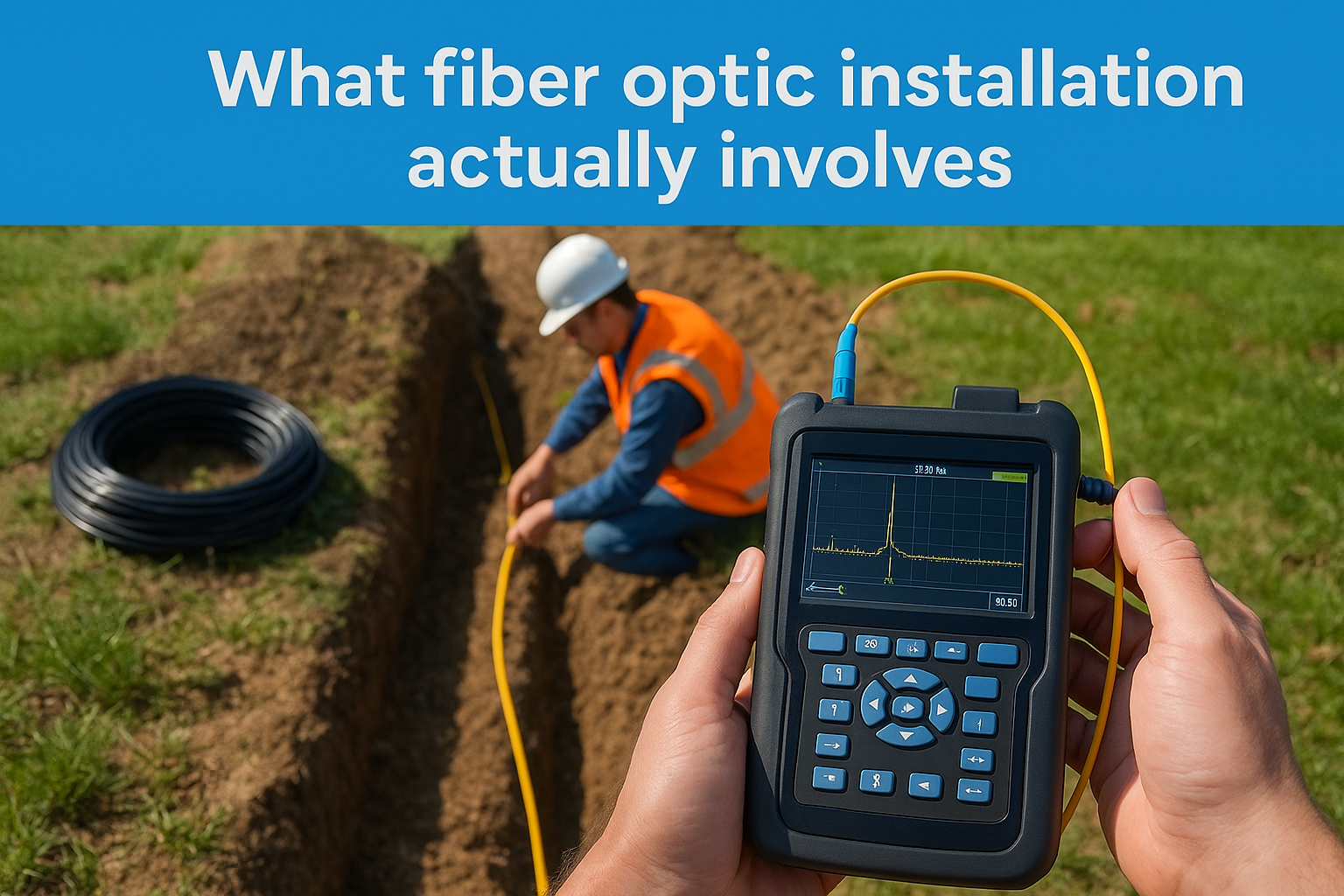
A fiber network is only as good as its weakest splice, so testing isn’t optional, it’s the step that proves the job was done right.
Backbone cabling vs. headend buildout
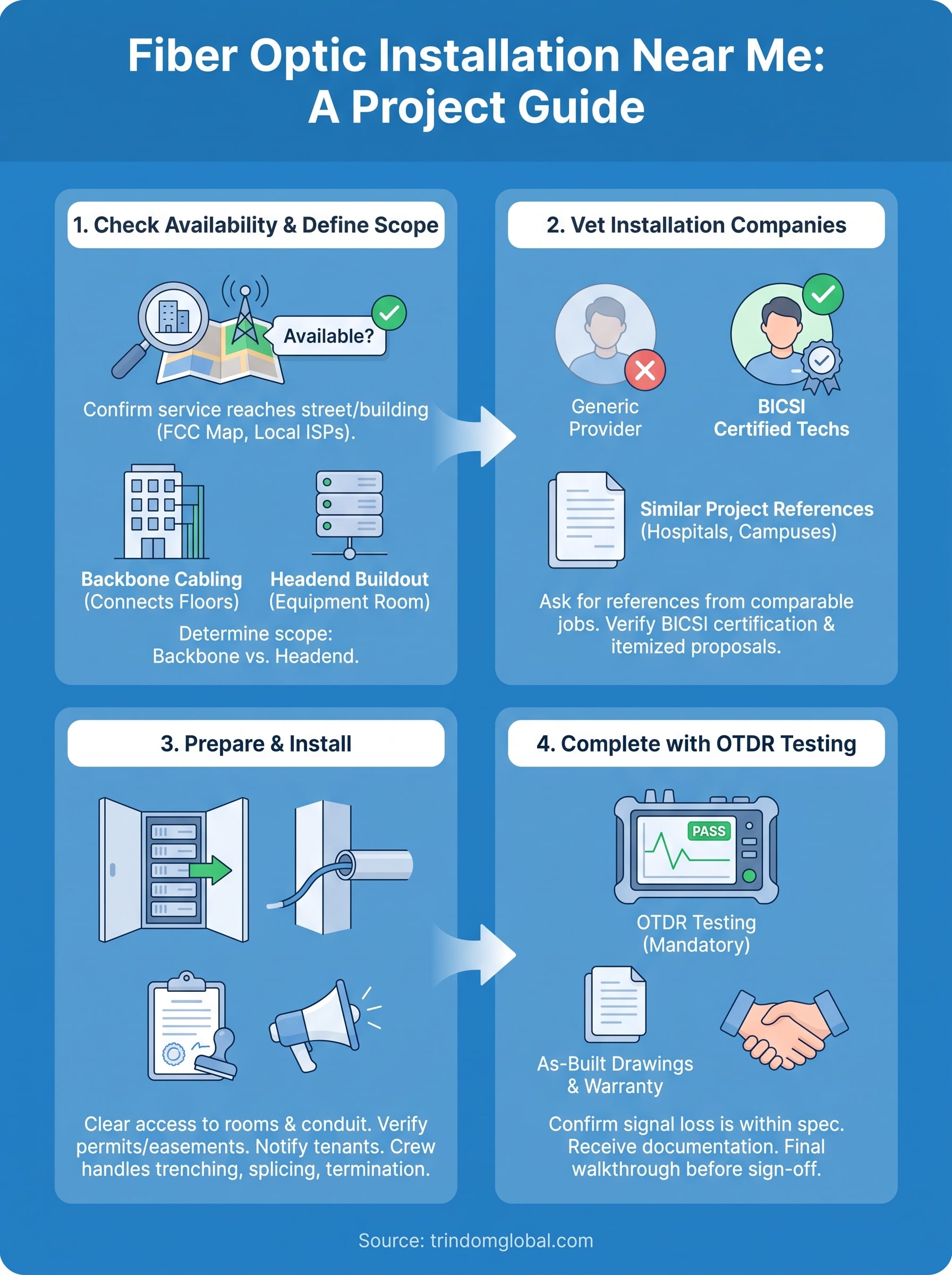
Most providers advertising fiber optic installation near me are really quoting one of two distinct scopes. Backbone cabling connects your building’s core switch to distribution points on each floor or unit, while a headend buildout is the equipment room where fiber terminates into routers, switches, and distribution panels before it ever reaches a device. Hospitals and multifamily campuses usually need both, and pricing them as separate line items keeps your proposal honest.
What differs between residential and commercial jobs
A single-family install and a hospital wing don’t share a scope, timeline, or budget. Here’s how they typically compare:
| Factor | Residential | Commercial/Institutional |
|---|---|---|
| Typical timeline | 1 to 3 days | 2 to 8 weeks |
| Permitting | Rarely required | Usually required |
| Testing standard | Basic continuity | Full OTDR certification |
| Project management | Not usually included | Dedicated PM expected |
Once you know which scope you’re actually buying, you’re ready to check whether fiber is even available at your address.
Step 1. Check fiber optic availability in your area
Before you call anyone, find out whether fiber optic infrastructure already reaches your building or your street. Coverage varies block by block, especially outside dense urban cores, so don’t assume a national provider’s marketing map reflects your actual address.
Availability determines your options more than price does, so confirm it first and everything else gets easier.
Where to check coverage
Start with these sources before requesting quotes:
- FCC National Broadband Map: search your address to see which providers report fiber service in your census block (fcc.gov/BroadbandData)
- Local ISPs directly: call their commercial or enterprise sales line, not the residential support number
- Your property manager or building owner: they may already have easement agreements or existing conduit on file
- Municipal permitting office: check for recent right-of-way permits that signal fiber construction nearby
Commercial and multifamily properties
Hospitals, hospitality buildings, and multifamily campuses often have different rules than single-family homes. Nearby fiber doesn’t guarantee it reaches your headend room or distribution closets, so ask any prospective installer to confirm the drop point during a site visit, not over the phone.
Step 2. Compare fiber optic installation companies
Once you’ve confirmed fiber reaches your building, start narrowing your list of fiber optic installation companies near me by what they’ve actually built, not what their website claims. Ask each candidate for references from similar projects, whether that’s a hospital wing, a hospitality property, or a multifamily campus, since a residential installer rarely has the crew or permits for institutional work.
A portfolio full of similar buildings tells you more than any sales pitch ever will.
Questions worth asking before you request a quote
Use this checklist on every call:
- Do you carry a BICSI-certified technician on staff, and can you name them?
- Who handles project management, an in-house PM or a subcontractor?
- Can you provide OTDR test results from a comparable prior job?
- Is your bid itemized by backbone cabling versus headend buildout?
- Are you certified as a minority or women-owned business, if that matters for your procurement process?
Red flags in a proposal
Watch for vague scopes that lump labor, materials, and testing into one lump sum, and compare each bid against what a fiber project should cost before you sign. That’s usually a sign the contractor hasn’t walked your site yet, and change orders will follow once they do.
Step 3. Prepare your property for installation
Once you’ve signed with one of the fiber optic installation companies near me on your shortlist, the work shifts to your side of the project. Crews need clear access to your equipment room, conduit runs, and any rooftop or exterior pathways before they can start pulling cable, and delays here push your whole schedule back.
The fastest installs happen at properties that did their homework before the crew ever showed up.
What to confirm before install day
Walk your site against this list a week ahead of the scheduled start:
- Equipment room access: confirm HVAC, power outlets, and rack space are ready for termination panels, following the same basics as setting up a server room
- Right-of-way clearance: verify any easements or landlord approvals are signed for trenching or aerial work
- Tenant or staff notice: give hospitals and multifamily buildings advance warning about noise and temporary outages
- Existing pathway documentation: hand over any conduit maps or as-built drawings you already have
Coordinating with building management
Property managers and facilities directors should sit in on the pre-installation walkthrough. Skipping this step is the single most common reason commercial jobs run past their quoted timeline.
Step 4. Complete your fiber installation
Installation day starts with the crew running cable through the pathways you cleared, then moving into splicing and termination at your headend or equipment room. Expect technicians to test every strand with an OTDR before they call the job finished, since a visual check tells you nothing about actual signal loss. A well-run crew documents each step with photos and test logs, so ask for that paper trail up front rather than chasing it down later.
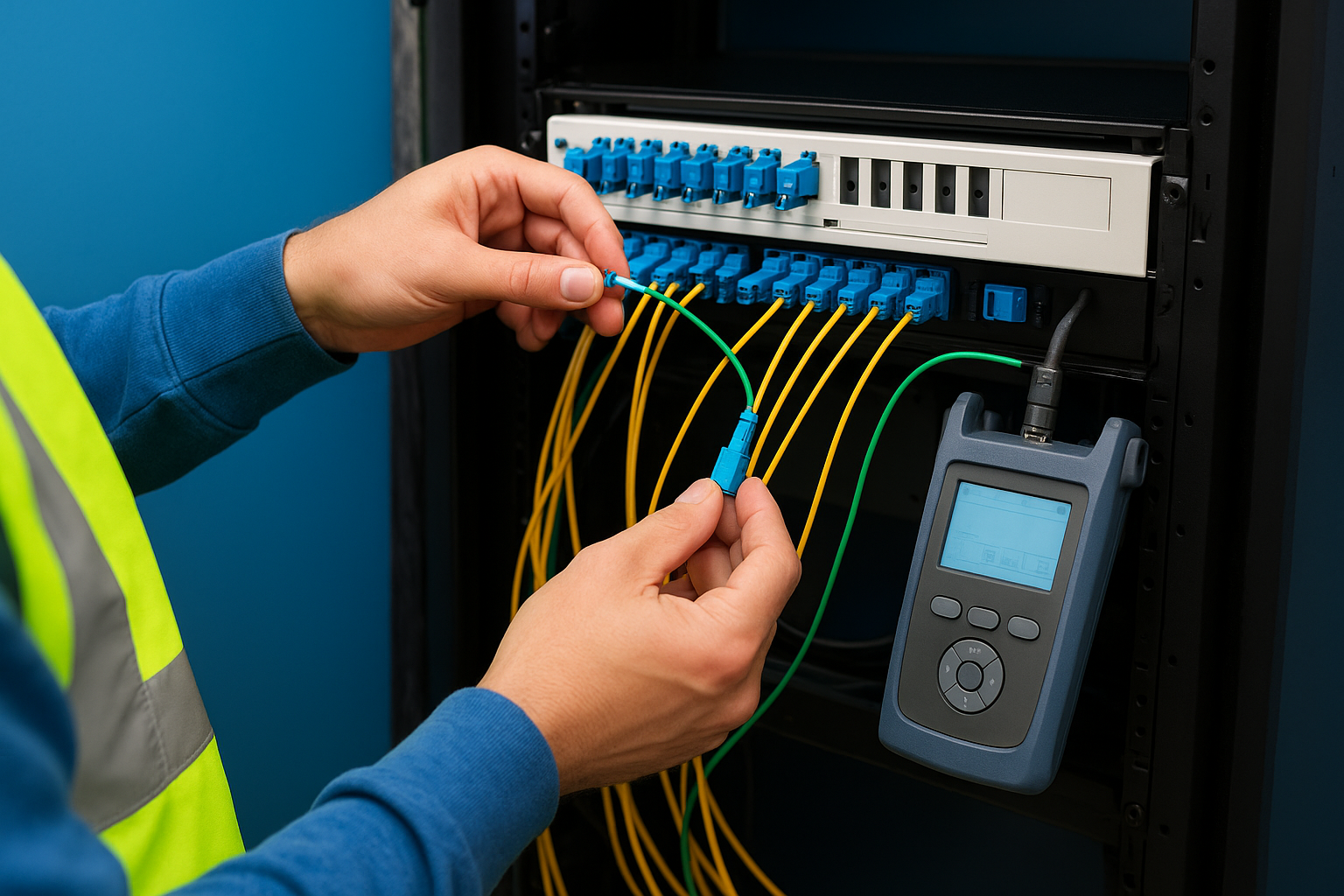
A finished install without documented OTDR results isn’t actually finished, it’s just cable that hasn’t failed yet.
What final testing should confirm
Before you sign off, your installer should hand over proof covering these points:
- Signal loss readings for every fiber run, within the spec your contract specifies
- As-built drawings showing final pathway and termination locations
- Labeling on every port and panel matching your network documentation
- Warranty terms in writing, including what triggers a service call
Final walkthrough and sign-off
Schedule a walkthrough with the project manager before releasing final payment. Confirm every closet, rooftop pathway, and headend panel matches what was quoted, and hold back a portion of payment until you’ve reviewed the test results yourself.
Finding the right fiber partner for your project
Finding a solid answer to fiber optic installation near me comes down to verifying scope, checking availability, and vetting real project history before you sign anything. Skip any of those steps and you’re gambling on a network that might not pass certification or hold up under load.
Getting this right matters more for hospitals, hospitality properties, and multifamily campuses, where downtime costs more than a missed deadline. Structured cabling and headend buildouts demand a crew that’s done the work before, not one learning on your budget.
Handled dozens of these projects across healthcare, hospitality, and multifamily campuses, and know what separates a clean install from a change-order nightmare. If you’re ready to talk through your site’s scope, availability, and timeline with a team that’s run this exact playbook, reach out to Trindom Global about structured cabling and headend buildout services and get a proposal built around what your building actually needs.


