

Picking the wrong vendor for medical device integration companies can mean months of delayed go-lives, clinicians fighting with systems that don’t talk to each other, and a compliance headache nobody wants to own. If you’re evaluating partners for a hospital or health system, you need more than a sales deck. You need proof of clinical workflow experience, a track record with HL7 and IHE standards, and technicians who have actually worked inside a live patient care environment.
This list answers the real question behind your search: which companies can actually deliver a safe, compliant, and functional integration, not just promise one. We looked at project management rigor, vendor partnerships, and hands-on installation capability, the things that separate a smooth rollout from a stalled one.
Below you’ll find 10 companies worth putting on your shortlist, including firms with deep experience in hospital-grade installations and design-build consultation. We included our own team, Trindom Global, alongside established names, so you can compare based on qualified technicians, project scope, and how well each vendor fits your facility’s specific IT objectives.
1. What is medical device integration and why it matters
Medical device integration is the process of connecting bedside devices such as vital signs monitors, infusion pumps, and ventilators directly to a hospital’s electronic health record (EHR) or clinical information system. Instead of a nurse manually transcribing a heart rate or oxygen saturation reading into a chart, the device pushes that data automatically, in near real time, into the patient’s record. Done well, it removes a huge source of manual charting errors and frees clinical staff to spend more time at the bedside instead of at a keyboard.
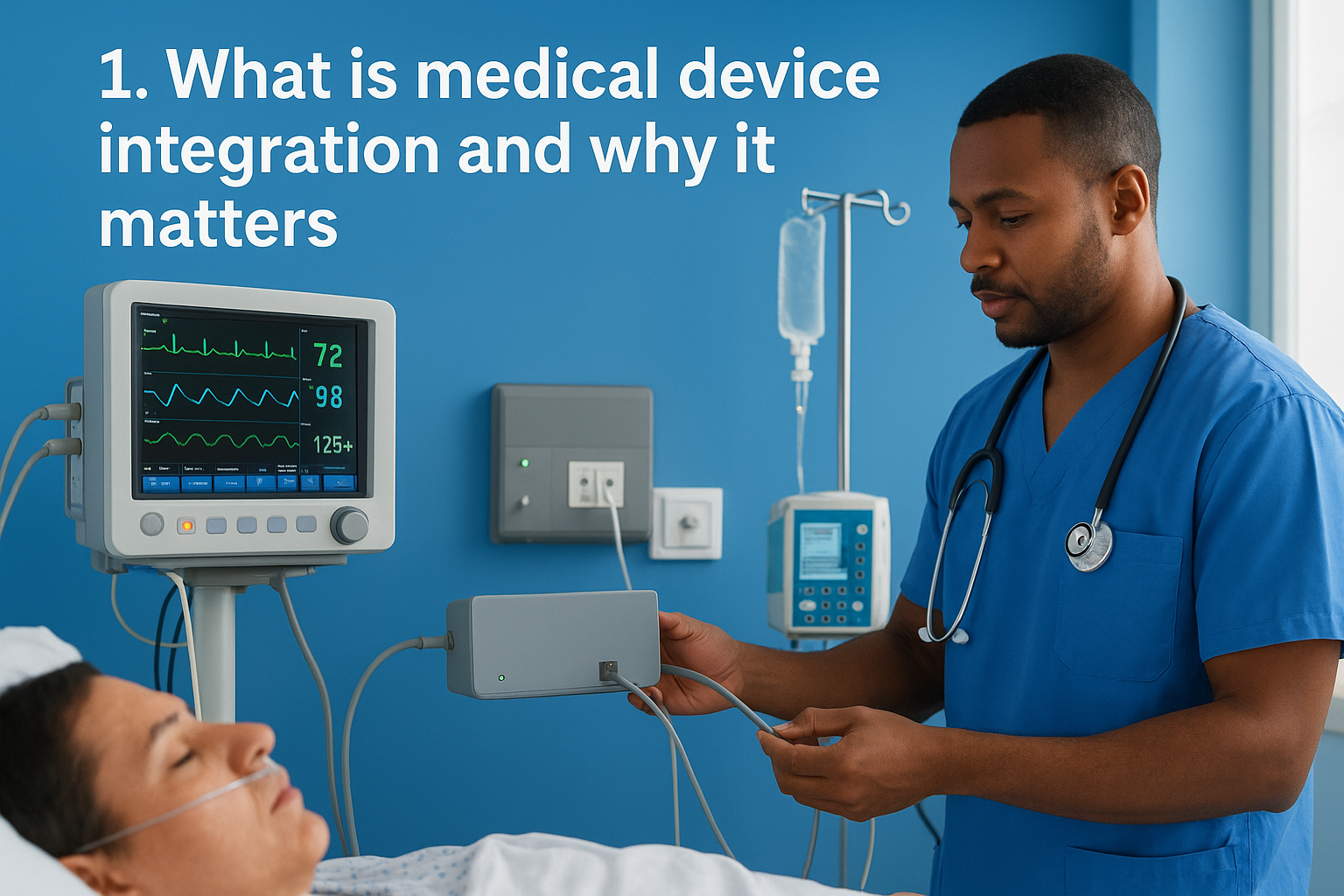
Underneath the surface, integration relies on standardized messaging protocols like HL7 and IHE profiles, along with device gateways or middleware that translate proprietary device signals into a format the EHR can read. Vendors typically install a physical or virtual gateway, map each device’s data fields to the correct EHR fields, and validate that alarms, waveforms, and discrete values arrive accurately and on time. This mapping work sounds simple on paper but gets complicated fast once you’re dealing with dozens of device models across multiple manufacturers and firmware versions.
Why integration failures cost more than money
When integration goes wrong, the consequences show up at the bedside first. A missed alarm signal, a delayed vital sign update, or a mismatched patient record isn’t just an IT ticket, it’s a patient safety event waiting to happen. Hospitals that rush a rollout or hire a vendor without genuine clinical experience often end up with alert fatigue, duplicate data entries, or devices that silently stop reporting after a software update.
A medical device integration that isn’t built around clinical workflow doesn’t just underperform, it puts patients at risk.
Beyond safety, poor integration drains money and staff morale. Nurses who don’t trust the data flow revert to manual documentation, which defeats the entire purpose of the investment. IT teams get pulled into constant break-fix cycles instead of strategic projects. And when surveyors or auditors show up, gaps in device connectivity can raise questions during accreditation reviews tied to standards like those from the Office of the National Coordinator for Health Information Technology, which governs interoperability expectations for U.S. healthcare organizations.
What a strong integration touches inside your facility
A capable integration partner doesn’t just plug in a monitor. Their scope typically covers:
- Bedside vital signs monitors and central monitoring stations
- Infusion pumps and smart pump libraries
- Ventilators and anesthesia machines
- Nurse call systems and alarm management platforms
- Interfaces to the EHR, ADT feeds, and clinical documentation systems
Getting all of these pieces to work together requires more than technical know-how. It demands project management discipline across clinical, IT, and biomedical engineering teams, plus a vendor who understands how a nursing unit actually operates during a go-live weekend.
2. Trindom Global
Trindom Global takes a design-build approach to medical device integration, meaning the same team that plans your project also installs and validates it, rather than handing you off between a consultant and a separate contractor. As a certified minority and women-owned small business, the company brings qualified technicians into live hospital environments to install and integrate bedside monitors, infusion systems, and network infrastructure that supports clinical data flow. Its work spans structured cabling and headend buildout, RF and network installation, and project management tailored to healthcare settings where downtime isn’t an option.
A single team handling design, installation, and integration removes the finger-pointing that stalls most hospital IT projects.
What it offers
Trindom Global’s scope covers the full backbone a hospital needs before and after a device goes live:
- Medical equipment installation with dedicated project management for hospital environments
- Structured cabling and headend buildout for network, telecom, and TV infrastructure
- RF and network installation for clinical and administrative spaces
- Government project support built around procurement and RFP requirements
- Design-build consultation to align infrastructure with a facility’s IT objectives
Who it’s best for
Hospitals and health systems planning a new construction or renovation project benefit most, since Trindom Global gets involved early at the design stage rather than after infrastructure decisions are locked in. Government facilities and agencies navigating strict RFP requirements also find value in working with a certified MWBE partner, which can satisfy procurement diversity goals while still delivering technical capability.
Pricing and considerations
Pricing runs project-based, scoped after an on-site assessment of your facility’s device count, cabling needs, and timeline. Organizations should request a consultation through trindomglobal.com to get a realistic quote rather than relying on generic estimates, since hospital installations vary widely based on building age and existing infrastructure.
3. Ascom
Ascom built its reputation on hospital communication and workflow platforms, and its device integration capability grew out of that foundation rather than starting there. The company’s Ascom Healthcare Platform connects nurse call systems, alarm notifications, and clinical devices to mobile handsets and smartphones, so clinicians get alerts wherever they’re standing instead of running back to a central station. Ascom is a Swiss company with a long presence in European hospitals, and it has expanded its North American footprint through partnerships with EHR vendors and device manufacturers over the past decade.
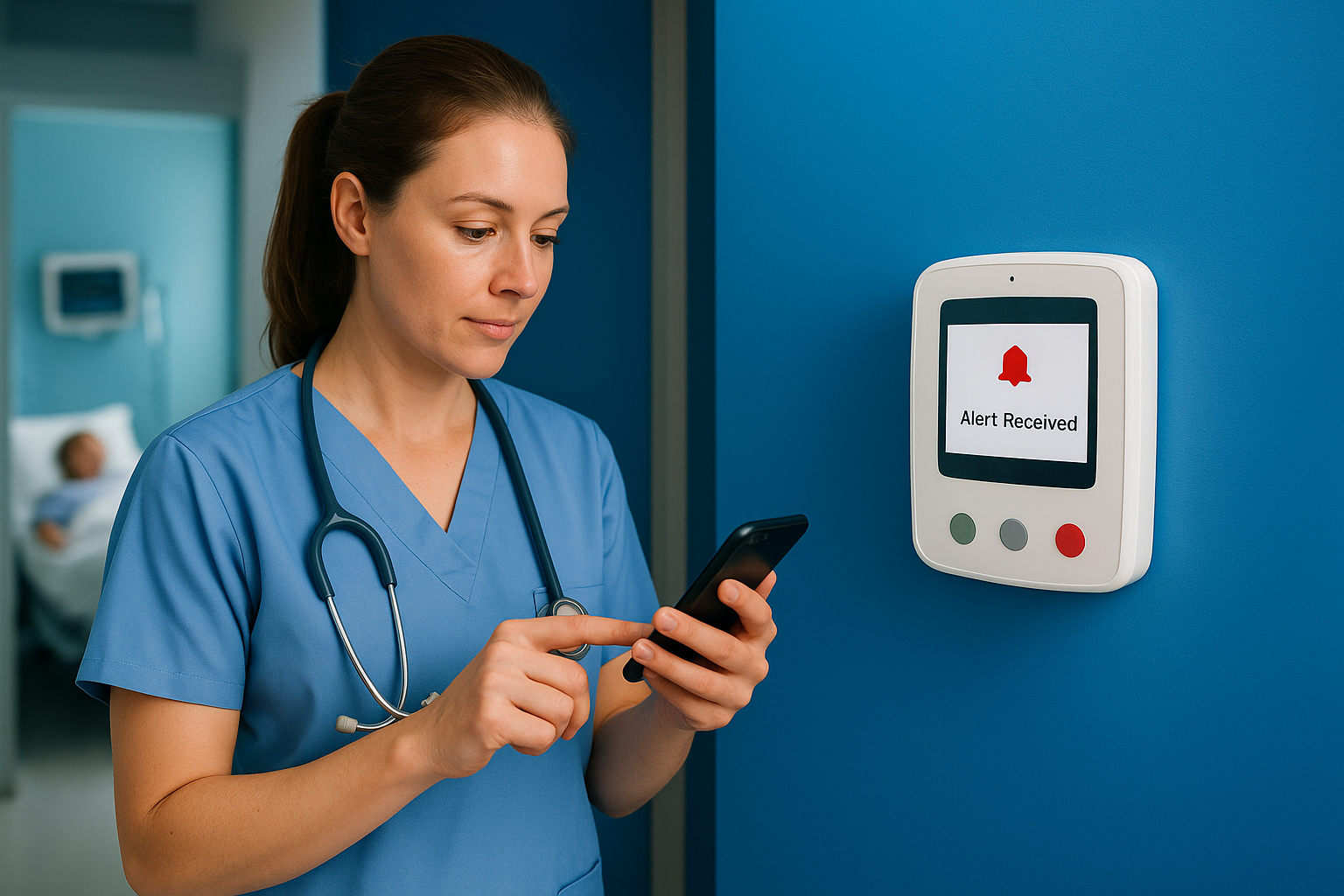
When alarm fatigue is your biggest risk, a platform built around smart notification routing solves a different problem than raw data integration alone.
What it offers
Ascom’s core strength lies in routing clinical alerts intelligently rather than simply piping data into a chart:
- Alarm and alert distribution to mobile devices and smartphones
- Nurse call system integration with escalation rules
- Middleware that connects monitors, ventilators, and infusion pumps to the EHR
- Workflow analytics that track response times to alarms
Who it’s best for
Hospitals struggling with alarm fatigue or inconsistent alert response times get the most value from Ascom, since the platform was designed around notification management first and device connectivity second. Facilities that already run a heavy mobile communication strategy for nursing staff will find Ascom’s ecosystem easier to layer on top of existing phones and pagers than starting from scratch with a competitor.
Pricing and considerations
Ascom typically prices through licensing and platform fees tied to the number of connected devices and mobile endpoints, plus hardware costs for gateways and handsets. Budget for a longer implementation timeline if your facility needs both nurse call replacement and device integration, since bundling those projects adds complexity to the rollout schedule and staff training requirements.
4. Philips Capsule
Philips Capsule runs one of the most widely deployed medical device integration platforms in U.S. hospitals, built after Philips acquired Capsule Technologie in 2021. The Capsule Medical Device Information Platform (MDIP) sits between bedside devices and the EHR, pulling data from thousands of device models across dozens of manufacturers. Because Philips already supplies patient monitors, ventilators, and imaging equipment to many hospitals, Capsule often arrives as part of a broader vendor relationship rather than a standalone purchase, which can simplify support calls but also lock a facility into a single vendor ecosystem.
A platform that already speaks to thousands of device models saves months of custom interface work that smaller vendors simply can’t match.
What it offers
Capsule’s platform focuses on breadth of device compatibility and downstream data use:
- Vitals Plus and Surveillance Plus modules for continuous monitoring data capture
- A device library covering thousands of pre-built interfaces across manufacturers
- Data routing to EHRs, clinical surveillance tools, and research databases
- Remote monitoring support for tele-ICU and tele-sitter programs
Who it’s best for
Large health systems with a multi-vendor device fleet benefit most, since Capsule’s device library reduces the custom interface work that smaller platforms require. Academic medical centers and systems running tele-ICU programs also gain value from Capsule’s remote monitoring feeds, which route continuous data to centralized command centers without pulling clinical staff into extra documentation work.
Pricing and considerations
Philips Capsule prices on an enterprise licensing model based on connected bed count and the number of device interfaces needed, and costs climb quickly for systems with many hospital campuses. Facilities already using other Philips clinical equipment may see bundled pricing advantages, but organizations should ask directly about long-term support contracts, since Capsule’s scale means implementation timelines and support tickets can move slower than a smaller, more hands-on vendor.
5. Masimo
Masimo made its name in pulse oximetry and noninvasive patient monitoring before expanding into a broader connectivity platform called Masimo SafetyNet and Root with the Masimo Patient SafetyNet system. The company’s core technology, Signal Extraction Technology (SET), reduces false alarms from motion artifact, which matters a lot once you’re piping that data into a central system that nurses actually trust. Masimo has grown through acquisitions of monitoring and connectivity companies, and it now positions itself among the medical device integration companies that hospitals consider when patient monitoring accuracy is the top priority, not just data routing.
A device that reduces false alarms at the source solves a problem that no amount of downstream integration software can fix.
What it offers
Masimo’s platform centers on monitoring hardware paired with connectivity software that extends visibility beyond the ICU:
- Root patient monitoring hub with modular sensor connectivity
- Patient SafetyNet for continuous monitoring on general care floors
- Radius PPG for wireless, cable-free pulse oximetry
- Integration pathways into major EHR platforms via HL7 interfaces
Who it’s best for
Hospitals looking to extend continuous monitoring beyond the ICU to general medical-surgical floors get the most value from Masimo, since Patient SafetyNet was built specifically for that early-warning use case. Facilities that already struggle with false alarm rates on existing monitors also benefit, since Masimo’s sensor technology addresses the accuracy problem before it ever reaches the integration layer.
Pricing and considerations
Masimo prices its hardware and software separately, meaning hospitals should budget for sensor and monitor purchases alongside the SafetyNet software licensing and any interface fees for EHR connectivity. Facilities replacing existing monitors fleet-wide should plan for a phased rollout, since swapping hardware across an entire hospital campus takes longer and costs more than adding software-only integration to devices already in place.
6. Bernoulli Enterprise
Bernoulli Enterprise built its platform around real-time clinical surveillance rather than simple device-to-EHR data transfer, positioning itself as a layer that watches patient data continuously and flags deterioration before a nurse would catch it on rounds. The company’s Bernoulli One platform pulls data from monitors, ventilators, and infusion pumps, then applies early warning scoring and rules-based alerting on top of that raw feed. Hospitals running population health initiatives or trying to reduce failure-to-rescue events often look at Bernoulli specifically because its value proposition goes beyond connectivity into predictive clinical use.
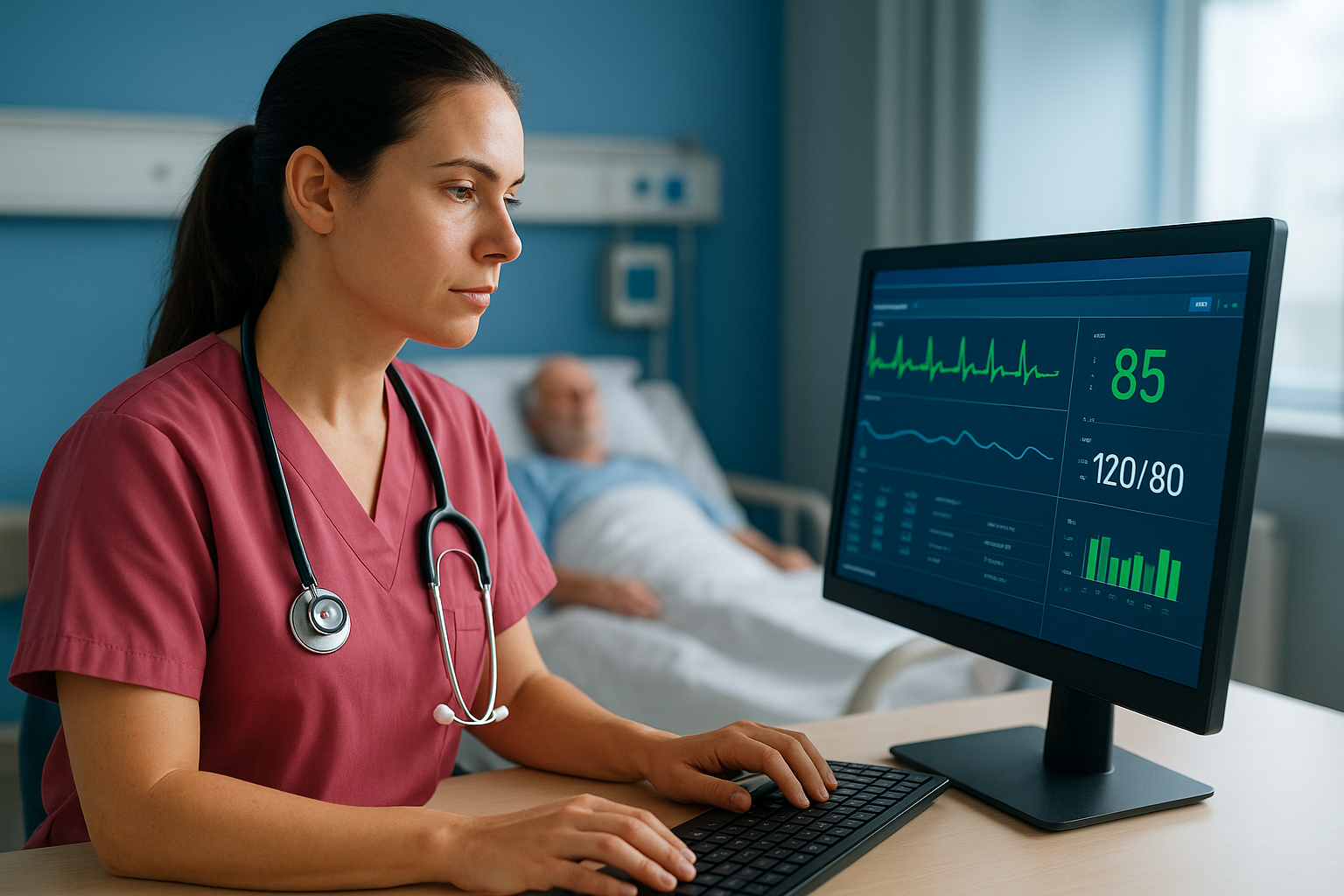
Surveillance software only earns clinician trust when its alerts catch real deterioration, not just noise from a busy monitor.
What it offers
Bernoulli’s platform emphasizes analytics and rules on top of a standard integration layer:
- Bernoulli One for real-time device data aggregation and surveillance
- Early warning scores and configurable clinical rules engines
- Data feeds to EHRs, clinical dashboards, and research repositories
- Remote patient monitoring support for post-acute and home settings
Who it’s best for
Health systems running clinical surveillance programs aimed at reducing adverse events, such as sepsis or respiratory failure, get the most direct benefit from Bernoulli, since the platform was built around that use case rather than bolted onto a generic integration engine. Organizations expanding into remote patient monitoring for chronic disease management also find Bernoulli’s architecture flexible enough to extend past the hospital walls into home health programs.
Pricing and considerations
Bernoulli prices through software licensing tied to bed count and analytics modules, so a facility buying only basic connectivity pays less than one deploying full surveillance rules across every unit. Ask vendors directly how much clinical staff training is bundled into implementation, since a surveillance platform only delivers value if nurses and physicians actually trust and act on the alerts it generates, and that trust takes deliberate onboarding, not just a software install.
7. iMDsoft
iMDsoft focuses on critical care and perioperative environments, building its MetaVision clinical information system specifically for ICU, OR, and anesthesia workflows rather than general med-surg floors. The platform captures data directly from ventilators, infusion pumps, and physiologic monitors at the bedside, then structures that data into a format built for the fast documentation pace of an intensive care unit. Unlike broader integration platforms that serve an entire hospital, iMDsoft narrows its focus to the highest-acuity units where manual charting errors carry the most risk and where clinicians have the least time to spare.
A platform built for one unit type beats a generic system trying to serve every department at once.
What it offers
iMDsoft’s MetaVision suite centers on capturing and structuring high-volume critical care data:
- Automated device data capture in ICU, OR, and anesthesia settings
- Structured documentation templates built around critical care workflows
- Perioperative anesthesia records with device-driven vitals capture
- Clinical decision support tools layered on top of continuous monitoring feeds
Who it’s best for
Academic medical centers and large hospitals with high-acuity ICU and OR volumes get the most value from iMDsoft, since MetaVision was engineered around the specific charting demands of critical care rather than adapted from a general-purpose platform. Anesthesia groups looking to replace paper records with automated perioperative documentation also find iMDsoft a strong fit, given its long track record in that specific niche.
Pricing and considerations
iMDsoft prices MetaVision through enterprise licensing tied to bed count within the ICU and OR units it serves, not the hospital’s total bed count, which keeps costs more predictable for facilities only deploying in critical care. Ask about implementation support during the rollout, since critical care staff have little tolerance for downtime, and a vendor unfamiliar with ICU shift patterns can disrupt care during the transition.
8. Connexall
Connexall positions itself as a vendor-neutral middleware platform, meaning it doesn’t sell devices or an EHR of its own but instead specializes in routing data and alarms between whatever systems a hospital already owns. Built by Gordian Health Solutions, the platform has spent years focused specifically on clinical workflow automation, connecting nurse call, physiologic monitors, ventilators, and infusion pumps into a single alarm management engine. Because Connexall doesn’t compete with device manufacturers, hospitals running a mixed fleet from multiple vendors often find it easier to negotiate interoperability than with a platform tied to one brand’s hardware.
Vendor neutrality matters most when your hospital has spent a decade buying devices from whoever had the best price at the time.
What it offers
Connexall’s platform centers on flexible rules and routing rather than proprietary hardware:
- Vendor-neutral middleware connecting devices, nurse call, and EHRs
- Configurable alarm escalation rules based on unit, role, and shift
- Real-time location system (RTLS) integration for staff tracking during alerts
- Reporting dashboards for alarm response time and compliance audits
Who it’s best for
Health systems with a fragmented device inventory built up over years of acquisitions or mergers get the most value from Connexall, since the platform was designed to sit above disparate systems rather than replace them. Facilities already using or considering RTLS technology for staff safety and workflow tracking also benefit, given Connexall’s native support for that layer of integration.
Pricing and considerations
Connexall prices through software licensing scaled to connected device count and facility size, with implementation costs varying based on how many legacy systems need custom interface work. Facilities should budget extra time for configuration, since a vendor-neutral platform requires more upfront rules-building than a single-vendor system that arrives with defaults already tuned to its own hardware.
9. Persistent Systems
Persistent Systems works differently from the other names on this list, since it builds custom integration engineering for medical device manufacturers and health systems rather than selling a packaged connectivity product. The company operates as a software engineering partner, developing interoperability solutions and embedded connectivity for OEMs who need their devices to talk to EHRs, cloud platforms, or hospital middleware but lack the internal engineering bandwidth to build that layer themselves. Hospitals rarely buy directly from Persistent Systems the way they would from Ascom or Masimo, but its work ends up inside the devices and platforms those hospitals already use.
A company that engineers the connectivity layer for device makers shapes interoperability long before a hospital ever signs a contract.
What it offers
Persistent Systems focuses on the engineering side of medical connectivity rather than a shelf-ready hospital product:
- Custom software development for medical device interoperability
- Cloud platform integration for remote monitoring and data analytics
- HL7, FHIR, and DICOM interface engineering for OEM clients
- Regulatory-aware development processes supporting FDA submission needs
Who it’s best for
Medical device manufacturers building new connectivity features into their hardware, rather than hospitals shopping for a finished integration platform, get the most direct value from Persistent Systems. Health systems with large in-house IT departments running custom-built interoperability projects may also engage Persistent as a development partner, though this fits organizations with technical staff to manage a software engineering relationship, not facilities looking for a turnkey install.
Pricing and considerations
Persistent Systems prices through custom engineering contracts scoped to project complexity, timeline, and regulatory requirements, which means costs vary far more widely than a licensed software platform. Organizations should expect a longer sales and scoping process, since this isn’t a vendor you call for a same-quarter hospital rollout, it’s a partner you bring in during product development or a major custom integration build.
10. Digi International
Digi International builds the network hardware that sits underneath many medical device integration projects rather than the clinical software layer itself. The company manufactures cellular routers, gateways, and embedded connectivity modules that hospitals and device manufacturers use to get data off a device and onto a network reliably, especially in settings where wired infrastructure isn’t practical. Digi’s healthcare-specific line includes device servers built to meet the reliability and security expectations of a clinical environment, which makes it a common name behind the scenes even when hospitals never see the Digi logo on a finished platform.
Hardware you never see holds the whole integration together when the network layer fails.
What it offers
Digi’s product line focuses on the connectivity hardware that carries device data to the software platforms above it:
- Cellular and wired gateways for connecting legacy medical devices to modern networks
- Embedded connectivity modules for OEM device manufacturers
- Remote device management software for monitoring gateway health and uptime
- Secure network infrastructure built around HIPAA-conscious data handling requirements
Who it’s best for
Device manufacturers building connectivity into new hardware, and hospitals with legacy equipment that lacks native networking capability, get the most direct value from Digi International. IT teams managing distributed facilities, such as multi-site clinics or rural health networks with unreliable wired infrastructure, also benefit from Digi’s cellular gateway options, since they solve a connectivity problem that a software-only integration vendor can’t fix on its own.
Pricing and considerations
Digi prices its hardware per unit, with gateways and modules sold individually or in bulk for larger deployments, plus optional subscription fees for remote device management software. Facilities should factor in that Digi solves a networking problem, not a full clinical integration, so most hospitals pair it with a platform like Capsule, Bernoulli, or Connexall to handle the EHR-facing side of the work.
11. GE HealthCare
GE HealthCare spun off from General Electric in 2023, but its device integration roots go back decades through patient monitoring lines like the CARESCAPE portfolio and its Mural Virtual Care Solution. The company sells monitors, ventilators, and imaging equipment alongside the software that ties them together, which puts it in a similar position to Philips Capsule as a vendor that bundles hardware and connectivity rather than selling middleware alone. Hospitals already running GE monitors on the floor often adopt GE’s integration software by default, since it ships with native compatibility that a third-party platform would need custom interfaces to match.
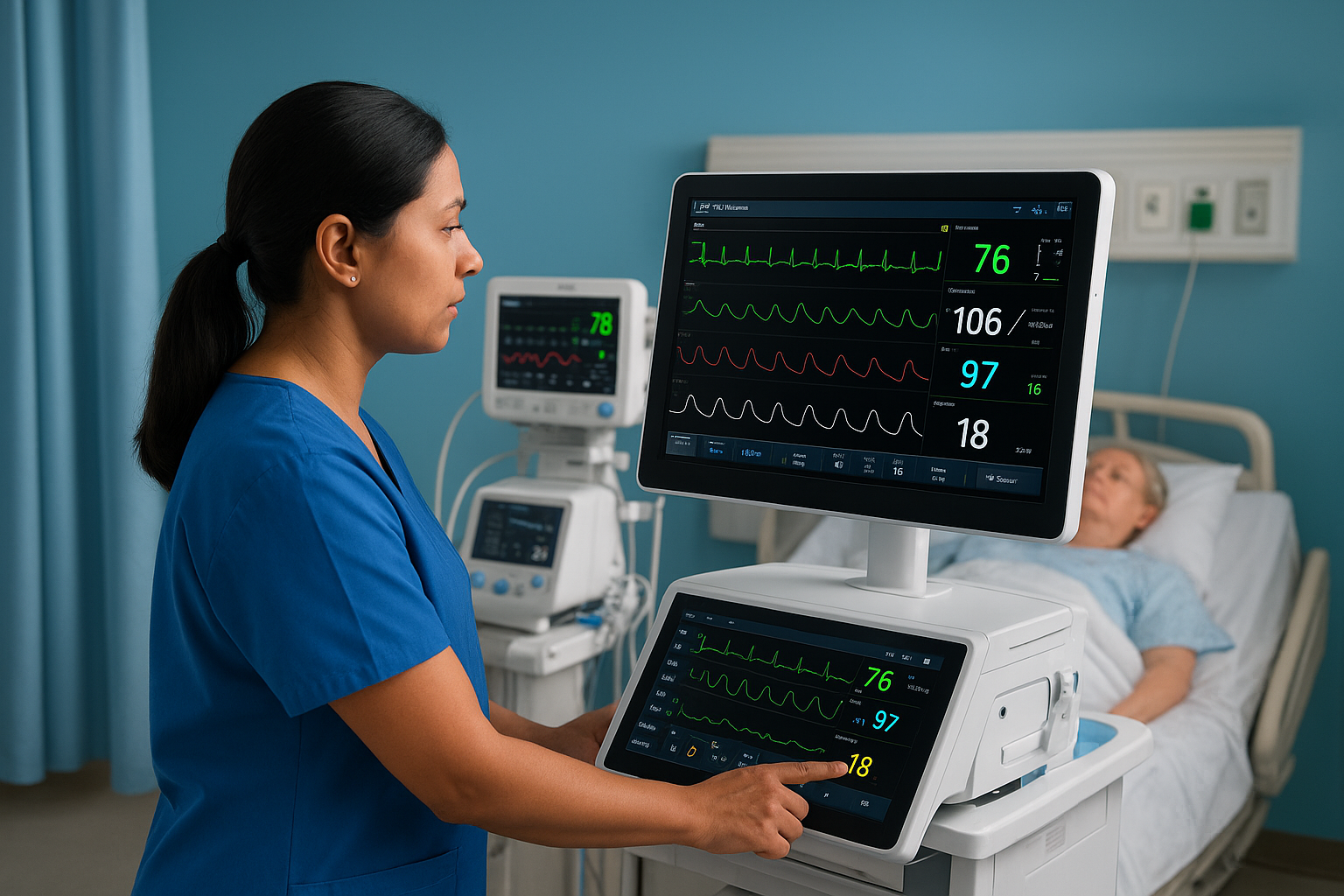
Buying your monitors and your integration platform from the same company simplifies support calls but narrows your future vendor choices.
What it offers
GE HealthCare’s connectivity stack centers on its own device fleet while extending into broader hospital data needs:
- CARESCAPE Gateway for connecting bedside monitors and ventilators to the EHR
- Mural Virtual Care Solution for centralized surveillance across multiple units
- Clinical data aggregation feeding predictive analytics and command-center dashboards
- Interface engineering for third-party devices alongside GE’s own hardware
Who it’s best for
Health systems with a large existing GE device fleet get the most straightforward value, since native compatibility cuts down on custom interface work other vendors would need to build from scratch. Hospitals building or expanding a centralized monitoring command center across multiple campuses also find Mural a strong fit, given its design around aggregating data from many units into one surveillance view.
Pricing and considerations
GE HealthCare prices through enterprise contracts bundling hardware, software licensing, and support, with costs scaling to device count and the number of connected facilities. Ask directly how GE handles non-GE devices already on your floors, since a fleet mixed with other manufacturers may need additional interface work that isn’t included in a standard bundle.
12. How to choose the right integration partner
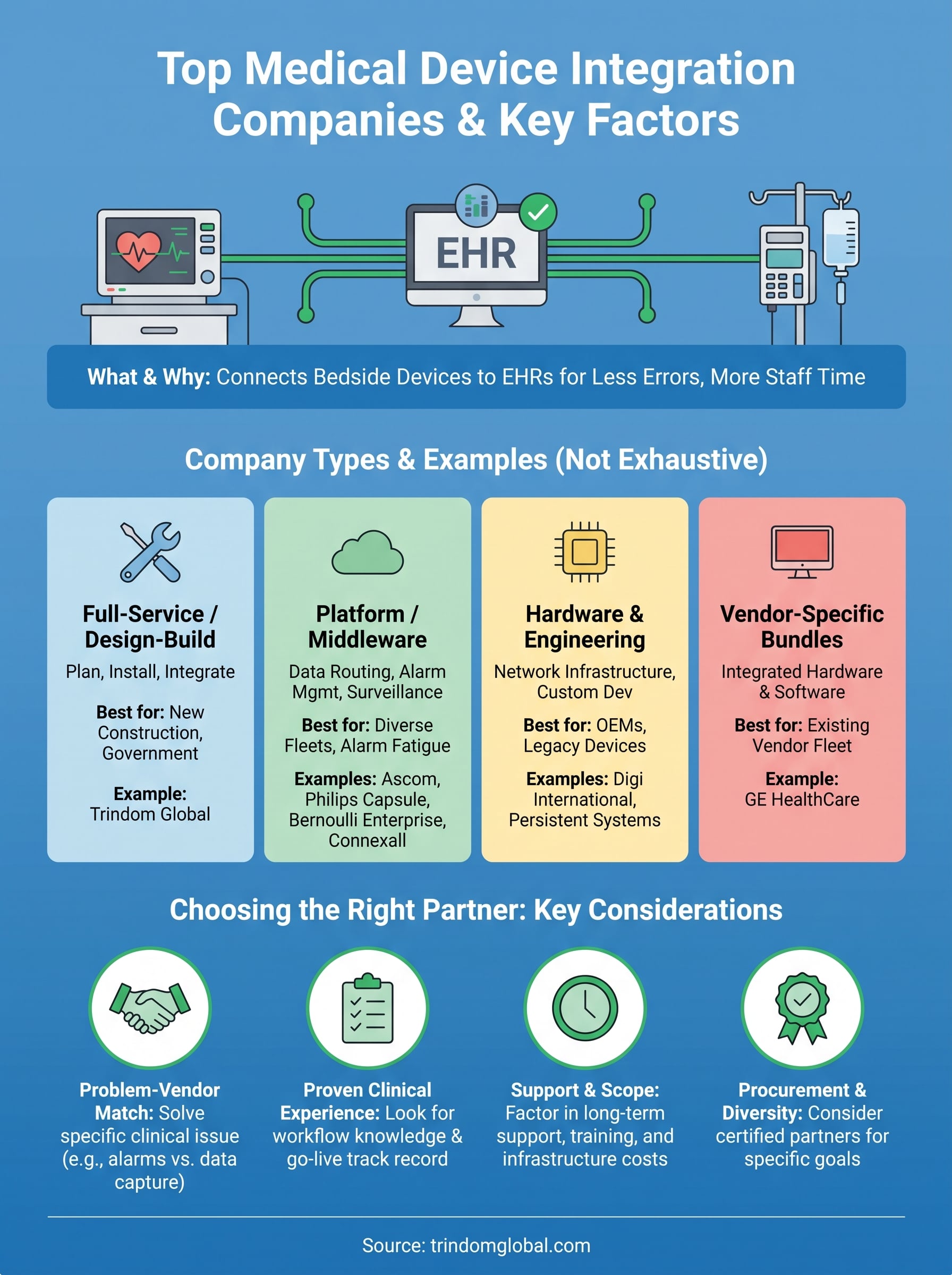
Comparing ten vendors side by side only helps if you know which criteria actually predict a successful rollout. Start by asking every candidate for references from facilities similar in size and device mix to yours, then call those references and ask specifically about go-live disruptions, not just final satisfaction scores. Vendors who dodge that question or only offer curated case studies deserve extra scrutiny.
Next, map each vendor’s strength against your actual problem. A hospital chasing alarm fatigue needs a notification platform like Ascom or Connexall, not a hardware-heavy solution like Digi International. A facility with a fragmented device fleet built through mergers benefits from vendor-neutral middleware, while one already standardized on a single manufacturer’s monitors may get more value staying inside that ecosystem. Matching the vendor’s core competency to your actual pain point matters more than picking the biggest name on the list.
The right integration partner solves your specific clinical problem, not a generic connectivity checklist.
Budget for the full project, not just the software license. Factor in staff training time, network infrastructure upgrades, and the internal IT hours needed to manage the relationship after go-live. Ask each vendor directly how they handle support escalations during off-hours, since device failures at 2 a.m. on a med-surg floor don’t wait for business hours.
Finally, weigh procurement requirements alongside technical fit. Government facilities and health systems with supplier diversity goals should confirm a vendor’s certification status early, since that can shape which companies even qualify to bid. A design-build partner who handles both planning and installation, rather than passing you between separate consultants and contractors, tends to reduce the coordination gaps that cause delays. Whichever direction you go, insist on a documented validation plan before any device goes live, since that single step catches most integration failures before they reach a patient.
Finding the best fit for your organization
Every vendor on this list solves a different piece of the medical device integration puzzle, from Ascom’s alarm routing to Digi’s network hardware to Persistent Systems’ custom engineering work. No single company does everything well, so your job is matching a vendor’s core strength to the specific problem your hospital actually has, not the one a sales pitch describes. Pull your device inventory, talk to your clinical staff about where current workflows break down, and use that information to narrow this list before you request a single quote.
Organizations planning new construction, a renovation, or a government project with strict procurement requirements gain the most from a partner who handles design, installation, and integration under one roof instead of juggling separate contractors. If that describes your situation, reach out to Trindom Global to scope your project with a team that plans and builds the infrastructure your devices depend on, from the first design conversation through final validation.


