

Installing an MRI, CT scanner, or surgical suite is nothing like a standard IT rollout. One wrong measurement on a doorway or rigging path can delay a hospital wing opening by weeks and cost tens of thousands of dollars. That’s why hospital administrators and facilities directors spend so much time vetting medical equipment installation companies before signing a contract.
If you’re searching for a partner right now, you want a straight answer: who actually has the certifications, the rigging experience, and the project management chops to get complex equipment installed and integrated without disrupting patient care. This list focuses on companies with proven hospital environment experience, not general contractors who occasionally touch healthcare work.
Below, you’ll find five companies worth putting on your shortlist, including what each one specializes in, the type of facility they fit best, and where their design-build capabilities stand out. We’ll also point out where a minority and women-owned business certification can help you meet procurement requirements, since that matters for many hospital systems and government-affiliated facilities.
1. Trindom Global
Trindom Global tops this list because it treats hospital equipment installation as a specialty, not a side service. The company is a certified minority and women-owned small business enterprise that builds its entire model around design-build consultation, professional installation, and integration for IT infrastructure and capital equipment. That certification alone opens doors for hospital systems and government facilities with procurement quotas to meet, but the real value comes from how the team plans a project before a single cable gets pulled.
Services offered
Trindom’s scope covers the pieces most medical equipment installation companies treat as separate contracts:
- Medical equipment installations inside active hospital environments, staffed by qualified technicians and dedicated project managers
- Structured cabling and headend buildout for network, telecom, and TV infrastructure
- RF and network installation for commercial and hospitality settings
- Government project support tailored to RFP and procurement requirements
- Multifamily high-speed ISP solutions delivered through its sister service, Trintel
Who it’s for
Hospitals and health systems planning a new wing, imaging suite, or full facility retrofit will get the most from Trindom’s approach. Government agencies issuing RFPs also benefit from a vendor that already understands procurement paperwork, and property operators juggling both medical and broader infrastructure needs can consolidate vendors instead of managing three separate contracts.
Key differentiators
Strategic vendor partnerships and 25-plus years of combined ISP and infrastructure expertise back every project Trindom takes on. The company’s proprietary design-build process means one team owns planning, installation, and integration from start to finish, which cuts down on the handoff errors that plague multi-vendor projects.
A single accountable team from design to integration prevents the costly miscommunications that stall equipment installs.
That accountability, paired with MWBE certification, makes Trindom a strong first call for any facility that wants fewer vendors and clearer ownership of the outcome.
2. Medical Equipment Installation, Inc. (MEI)
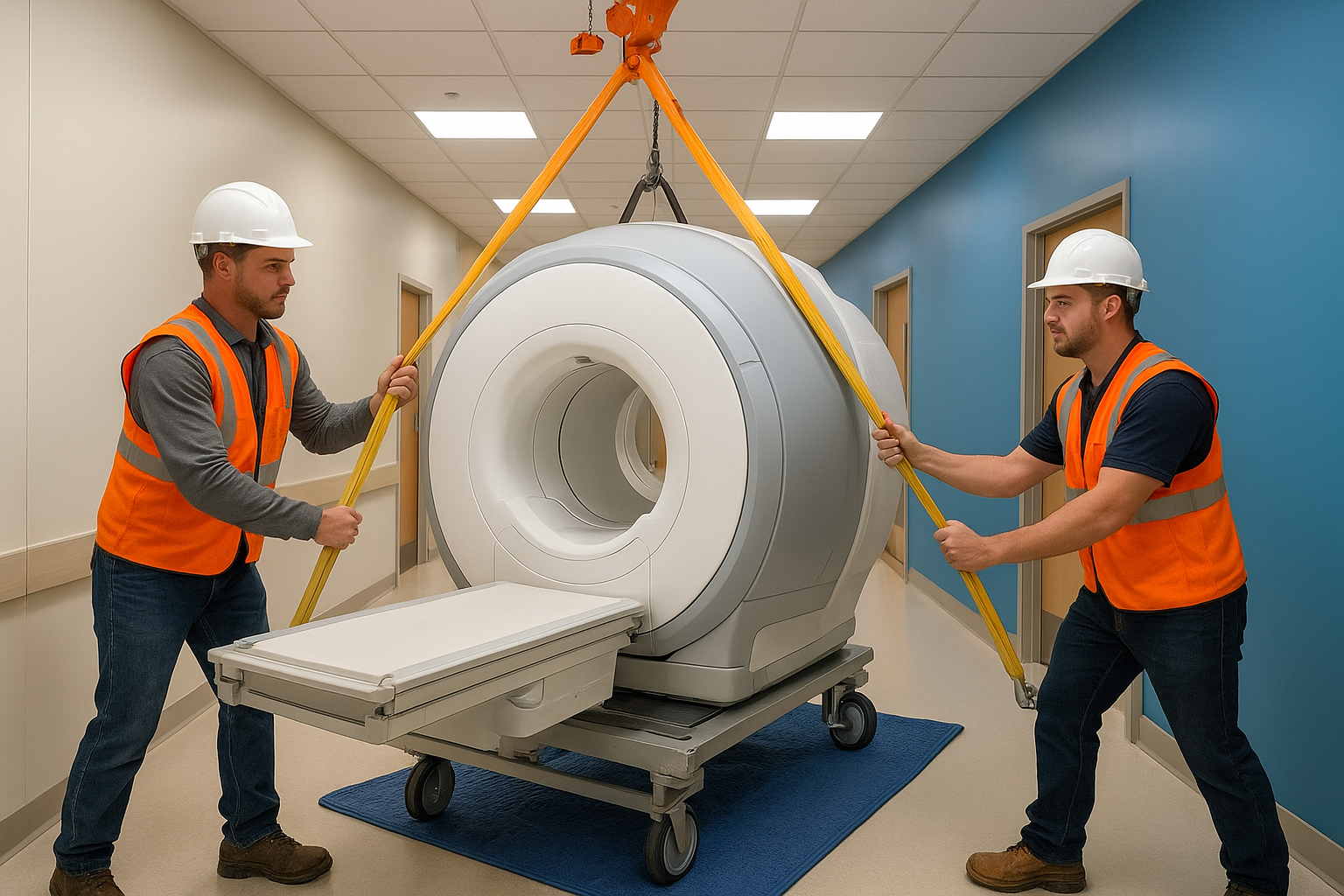
Medical Equipment Installation, Inc. built its name doing exactly what its title says: rigging and placing heavy diagnostic equipment inside hospitals across the country. Facilities teams often bring MEI in specifically for the physical move-in phase of large capital equipment, rather than a full design-build engagement.
Services offered
MEI focuses on rigging, de-installation, and reinstallation of imaging systems like MRI, CT, and cath lab equipment. The company also handles equipment relocation projects when hospitals renovate existing suites instead of building new ones.
Who it’s for
Hospitals mid-renovation, or health systems replacing a single imaging unit without touching surrounding infrastructure, fit MEI’s model well. It suits facilities managers who already have an architect and general contractor in place and just need a specialized rigging crew for the equipment itself.
Key differentiators
Decades of rigging experience with oversized, sensitive diagnostic machines sets MEI apart from general movers.
Rigging heavy imaging equipment through tight hospital corridors demands crews who’ve done it hundreds of times, not once.
That narrow focus means less flexibility for integrated infrastructure projects, but strong reliability for equipment-only moves.
3. STERIS Installation Services
STERIS brings a manufacturer’s weight to the table, since the company also builds sterilization and surgical equipment it installs. That dual role gives hospitals a rare advantage: the same organization that engineered the equipment also handles the surgical equipment installation on site, which cuts down on finger-pointing when something doesn’t calibrate correctly.
Services offered
STERIS installs and services sterile processing systems, surgical tables, lighting, and integrated OR equipment. Its teams also handle preventive maintenance contracts after install, so hospitals get a single point of contact for the equipment’s full lifecycle.
Who it’s for
Hospitals building or renovating operating rooms and sterile processing departments fit best here. Facilities already using STERIS-manufactured equipment gain the most, since warranty and service terms often favor factory-trained installers.
Key differentiators
Manufacturer-backed technical knowledge is STERIS’s biggest edge over independent installation companies.
When the installer built the machine, calibration disputes rarely happen.
Outside its own equipment lines, though, STERIS offers less flexibility than hospital equipment installation companies built around multi-vendor, design-build work.
4. Simon Hegele Healthcare
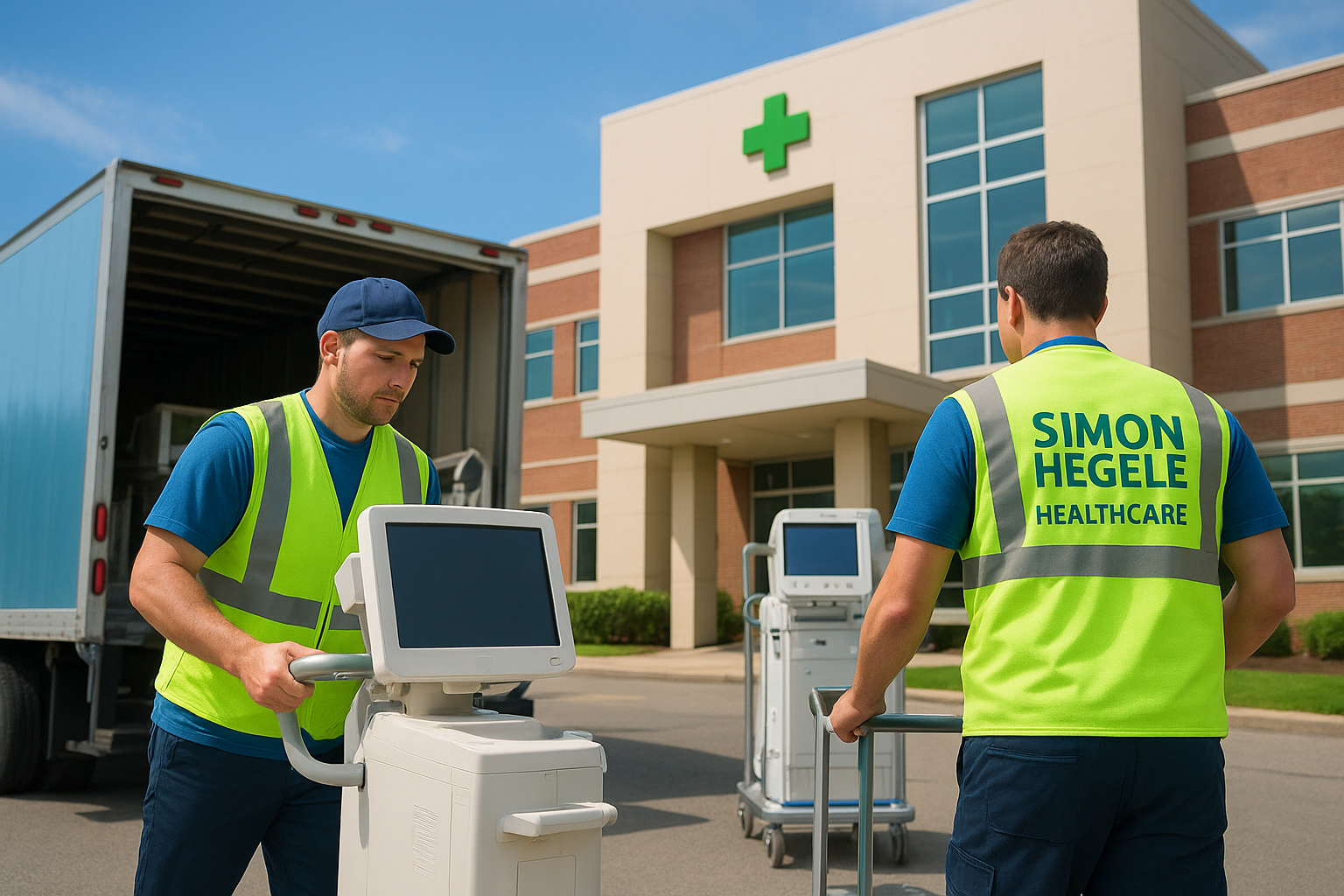
Simon Hegele Healthcare grew out of a European logistics background before expanding into US hospital relocations and equipment moves. The company treats medical equipment logistics as its core strength, coordinating everything from packing diagnostic devices to timing deliveries around active patient care schedules.
Services offered
Simon Hegele handles hospital relocations, equipment transport, storage, and installation support for moves between facilities or floors. Its teams also manage inventory tracking during large-scale moves, so nothing gets lost between the old building and the new one.
Who it’s for
Health systems consolidating multiple campuses, or hospitals moving entire departments into a new building, get the most value here. It suits facilities directors who need coordinated equipment moves across dozens of rooms at once, not a single imaging suite install.
Key differentiators
Logistics precision at scale separates Simon Hegele from smaller installation shops.
Moving an entire hospital wing without losing a single piece of equipment takes logistics discipline, not just installation skill.
That scale advantage comes with less emphasis on ground-up design-build consultation, so hospitals still need separate infrastructure planning before Simon Hegele’s crews arrive on site.
5. KR Wolfe
KR Wolfe built its reputation on medical equipment de-installation and reinstallation for hospitals replacing aging imaging systems. Facilities teams call on Wolfe when they need a crew that specializes in the physical handling of MRI, CT, and radiation therapy equipment, not the broader construction or cabling work around it.
Services offered
Wolfe’s teams handle rigging, de-installation, reinstallation, and equipment relocation for large diagnostic and therapy machines. The company also offers site preparation support, including coordinating with vendors on shielding and power requirements before equipment arrives.
Who it’s for
Hospitals swapping out a single imaging unit, or health systems relocating radiation therapy equipment between buildings, fit Wolfe’s model best. Facilities that already have a general contractor managing the broader project just need a specialized equipment crew for the machine itself.
Key differentiators
Experience with radiation oncology equipment sets Wolfe apart from installers who stick to standard imaging systems.
Handling radiation therapy equipment safely takes crews trained specifically for that risk, not general rigging experience.
That specialization makes Wolfe reliable for equipment-only jobs, though hospitals still need a separate partner for full facility design and infrastructure planning.
Finding the right installation partner for your facility
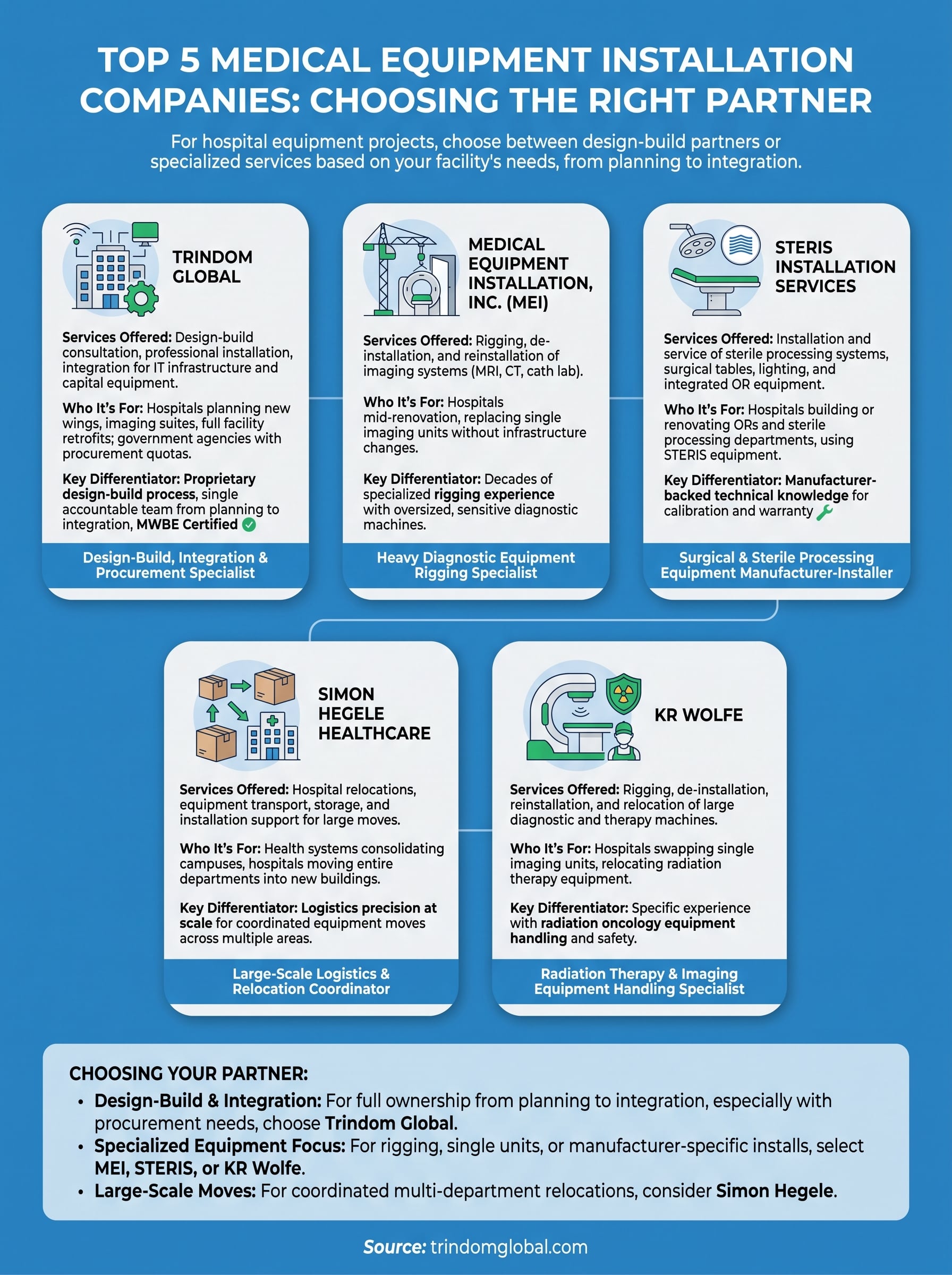
Picking between these five companies comes down to one question: does your project need a single accountable partner, or a specialist for one piece of the puzzle? Rigging-only firms like MEI and KR Wolfe excel when you already have design and construction handled elsewhere. Manufacturer-backed options like STERIS make sense when you’re installing their own equipment lines. Logistics-heavy moves favor Simon Hegele’s coordination strength.
Quality installation companies show their work through clear project management, documented certifications, and a track record in active hospital environments, not just a sales pitch. If your facility is planning new construction, a full retrofit, or juggling procurement requirements alongside equipment needs, a design-build partner who owns the whole process from planning to integration saves you from managing three vendors and three sets of finger-pointing.
That’s the gap Trindom Global fills. Talk to Trindom Global about your project and get a team that plans, installs, and integrates your equipment under one roof.


