

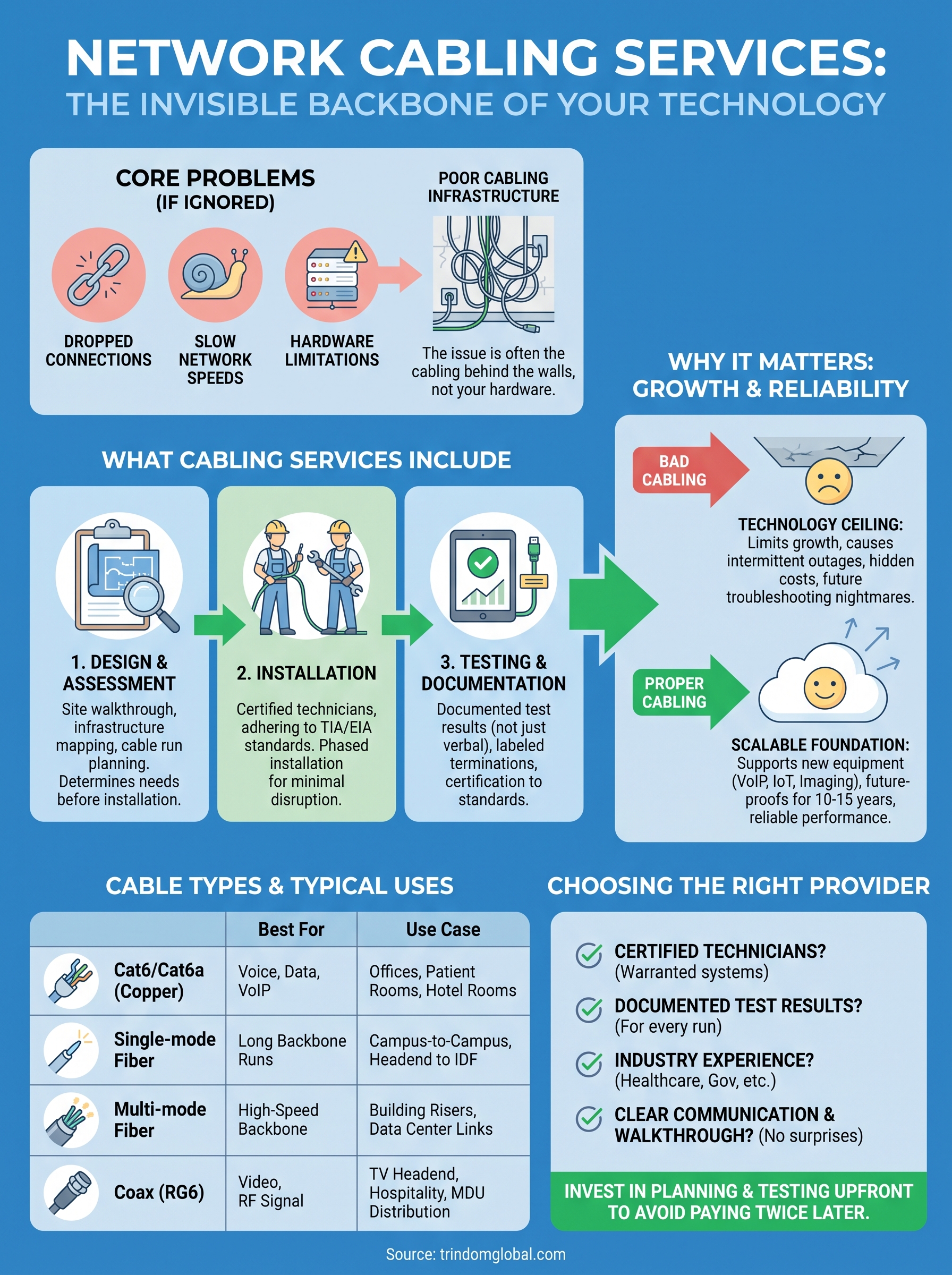
If your building’s network drops connections, slows to a crawl during peak hours, or can’t support new equipment, the problem usually isn’t your hardware. It’s the cabling behind the walls. Network cabling services cover the design, installation, and testing of the physical infrastructure that carries your data, voice, and video traffic, from the wiring closet to every outlet in the building. Get this wrong and every device you plug in afterward inherits the problem.
So what should you actually expect when you hire a cabling contractor? A qualified provider starts with a site walkthrough and infrastructure assessment, maps out cable runs and headend locations, then handles installation using certified technicians who follow TIA/EIA standards. You should also expect documented testing results, labeled terminations, and a system built to support whatever bandwidth your organization needs for the next 10 to 15 years, not just today’s devices.
This article breaks down exactly what network cabling services include, the different cable types you’ll encounter (copper, fiber, coax), how installation projects typically unfold, and what separates a contractor who does the job right from one who leaves you troubleshooting problems for years.
Why network cabling services matter for your organization
Bad cabling doesn’t just cause occasional glitches, it becomes the ceiling on everything your organization can do with technology. A hospital that needs to add imaging equipment, a hotel rolling out smart room controls, or an office switching to VoIP all run into the same wall: the infrastructure underneath wasn’t built for growth. Properly designed structured cabling removes that ceiling and gives you room to expand without ripping open walls again in two years.
The hidden cost of poor cabling
Most organizations don’t budget for cabling because they don’t see it, until it fails. Loose terminations, mismatched cable categories, and undocumented runs cause intermittent outages that IT teams chase for months without finding the actual source. Fixing a cabling problem after the fact costs far more than doing it correctly the first time, because technicians have to trace, relabel, and often replace runs buried inside finished walls and ceilings.
A network is only as reliable as the cabling nobody sees.
Where cabling issues show up first
Certain warning signs point straight back to the physical layer rather than your hardware or software. Recognizing them early saves you from a much larger repair bill down the road:
- Connections that drop during high-usage periods, especially in multi-tenant or high-density buildings
- Speeds that don’t match your service plan, even after replacing routers or switches
- Devices that work in one outlet but fail in another on the same run
- No documentation showing which cable goes where, forcing guesswork during troubleshooting
- Equipment installs delayed because nobody can confirm existing cabling supports the required bandwidth
Seeing more than one of these on your list usually means the wiring, not the electronics, needs attention.
Specific sectors carry higher stakes. Hospitals depend on reliable data transmission for patient monitoring systems and imaging equipment, where a dropped connection isn’t just inconvenient, it’s a safety issue. Government agencies face compliance requirements tied to procurement and security standards that unqualified installers often miss entirely. Multi-family properties need cabling that supports dozens of units simultaneously without one unit’s traffic degrading another’s. In every case, the cabling decision made today determines how much flexibility and reliability you have five or ten years from now.
How network cabling services work, from planning to installation
Every reputable project starts with a design-build assessment, not a truck full of cable. A technician walks your facility, notes existing pathways, counts drops needed per room, and identifies where telecom rooms or headend equipment should sit. This phase determines cable counts, conduit paths, and labeling conventions before anyone drills a hole, which is why skipping it causes so many of the problems described above.
From blueprint to build
Once the design is approved, the team pulls permits if required, schedules work around your operating hours, and begins running cable through the pathways identified during planning. Government facilities and hospitals often require phased installation so critical systems stay online throughout the project. Installers terminate each cable to industry standards, then label both ends so future technicians can trace a run in seconds instead of hours.
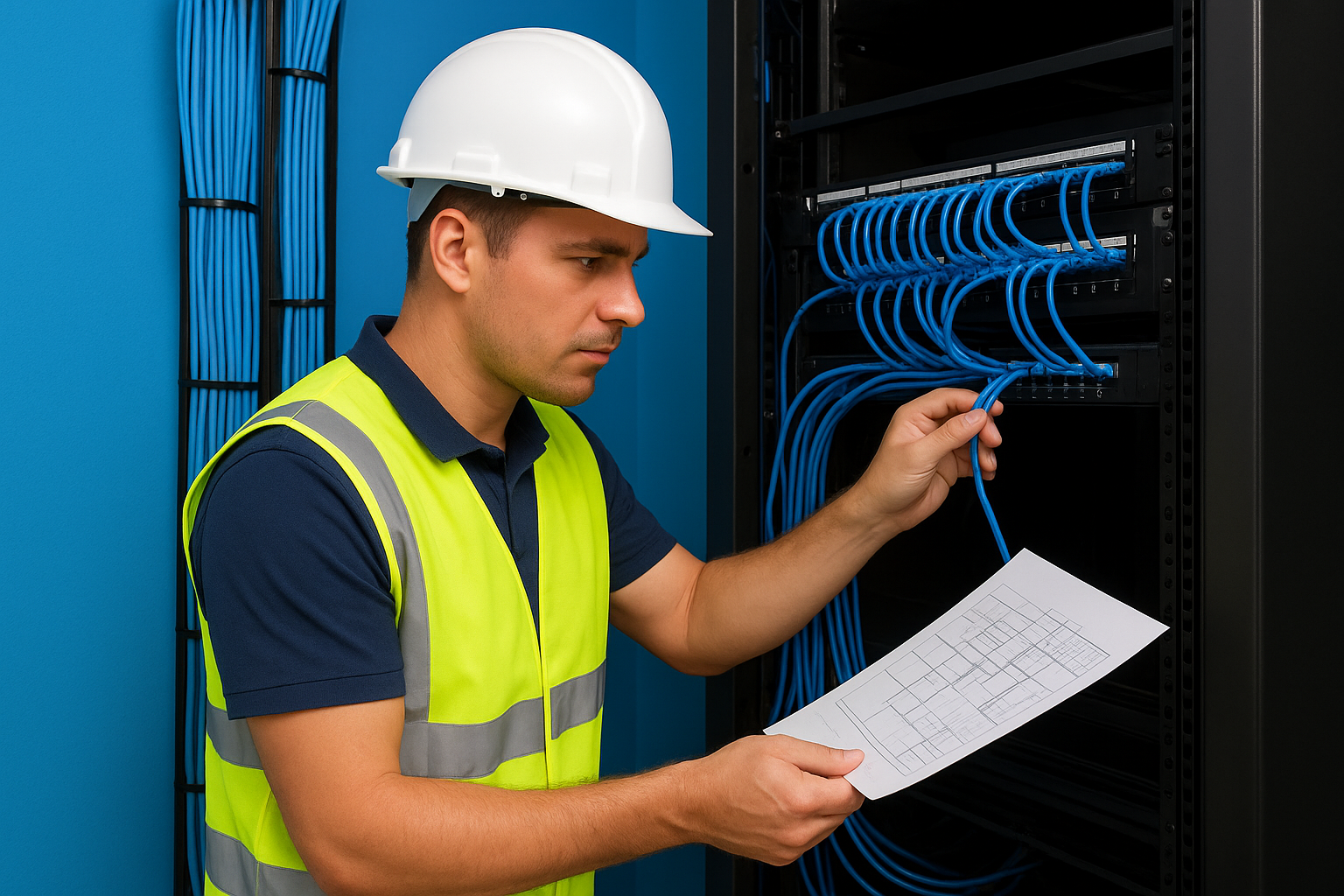
A cabling project succeeds or fails at the planning stage, long before the first cable gets pulled.
Testing and handoff
Testing comes before anyone calls the job finished. Certified technicians run each cable through certification testing that checks wire mapping, length, attenuation, and crosstalk against TIA cabling standards, then hand you a documented report for every run. Providers offering full structured cabling installation should also walk your team through the documentation, so you know exactly what’s behind every wall plate.
Throughout this sequence, communication matters as much as the technical work. A provider who explains delays, flags unexpected obstacles, and confirms scope changes before acting saves you from budget surprises at project close.
Types of network cabling services and cable options
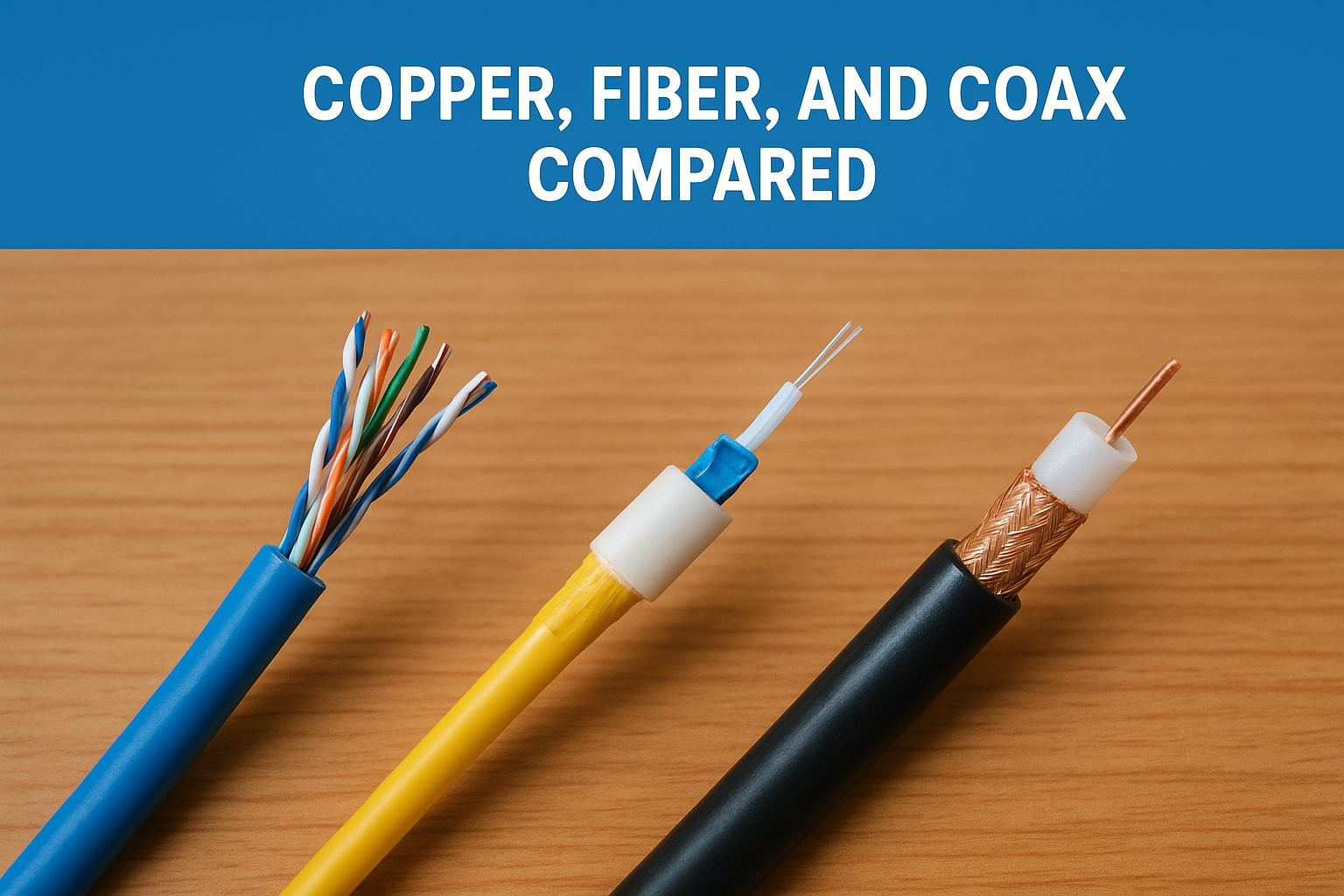
Not every building needs the same cable, and a good contractor won’t sell you fiber when copper does the job or skimp on copper where fiber is required. Data cabling installation typically covers copper twisted-pair (Cat5e, Cat6, Cat6a), fiber optic (single-mode and multi-mode), and coaxial cable for video and RF signal distribution. Each has a different bandwidth ceiling, distance limit, and cost per drop, which is why the assessment phase matters so much before anyone commits to a cable type.
Copper, fiber, and coax compared
Here’s how the main options stack up for planning purposes:
| Cable Type | Best For | Max Distance | Typical Use Case |
|---|---|---|---|
| Cat6/Cat6a | Voice, data, VoIP | 100m | Offices, patient rooms, hotel guest rooms |
| Single-mode fiber | Long backbone runs | 10km+ | Campus-to-campus, headend to IDF |
| Multi-mode fiber | High-speed backbone | 300-550m | Building risers, data center links |
| Coax (RG6) | Video, RF signal | 150m+ | TV headend, hospitality, MDU distribution |
The cheapest cable on the shelf is rarely the cheapest cable over ten years.
Matching cable to the actual workload
Hospitals lean heavily on fiber backbones to handle imaging data volumes, while multi-family properties often mix fiber risers with copper drops to each unit. Structured cabling installation for hospitality frequently blends coax for legacy TV service with Cat6a for smart room controls. A provider who asks about your five-year equipment roadmap before recommending cable, rather than defaulting to whatever’s cheapest, is the one worth hiring.
What to expect: costs and choosing the right provider
Pricing for network cabling services varies by cable type, drop count, building access, and whether work happens during business hours or after hours. A single Cat6a drop typically runs $150 to $300 installed, while fiber backbone runs cost significantly more depending on distance and termination type. Expect a written quote broken down by material, labor, and testing, not a lump sum that leaves you guessing what’s included.
Beyond price, credentials separate contractors who deliver a working network from those who leave you calling back within a year. Ask any prospective provider these questions before signing a contract:
- Are your technicians certified to install the cable manufacturer’s warranted systems?
- Will I receive documented test results for every cable run, not just a verbal confirmation?
- Have you completed projects in my industry, whether that’s healthcare, hospitality, or government?
- Who manages the project day-to-day, and how will delays or scope changes get communicated?
- Does your bid include labeling, documentation, and a walkthrough at project close?
A low bid that skips testing and documentation always costs more later.
Government and healthcare clients face an additional layer: procurement rules that may require working with a certified minority or women-owned business. Trindom Global holds that certification and has managed structured cabling and headend buildout projects across hospitals, hospitality properties, and government facilities, which means the paperwork and the fieldwork are both handled by people who’ve done this before.
Building a network you can rely on
Good cabling disappears into the walls and stays there, working, for a decade or more. That’s the entire point. Network cabling services exist to solve a problem before it starts: dropped connections, undersized backbones, and equipment installs that stall because nobody can confirm the wiring supports them. Get the planning, cable selection, and testing right upfront, and you spend the next ten years thinking about your network instead of fighting it.
Choosing a provider comes down to the same short list every time: certified technicians, documented testing, industry experience, and a team that communicates instead of disappearing between milestones. Skip any of those and you’re paying twice, once for the install and again for the fix.
If you’re planning a project for a hospital, hotel, government facility, or multi-family property, talk to Trindom Global about structured cabling and headend installation before you commit to a contractor.


